
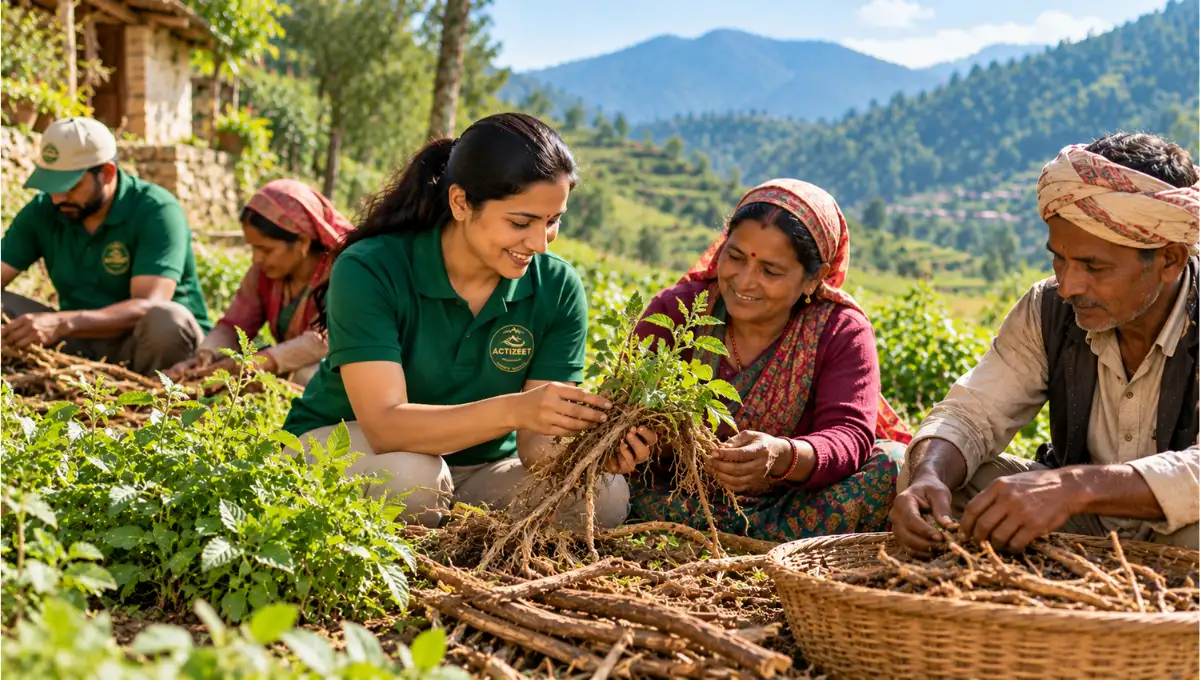
Mulethi Sourcing: How to Choose Pure Licorice Root Powder
Mulethi is one of the most familiar roots in an Indian kitchen cabinet. It is chewed for a scratchy throat, stirred into kadha and added to Ayurvedic blends. Yet most people never ask where their mulethi actually comes from. The answer is often a long journey across borders, and every step of that journey shapes how pure, safe and effective the final powder is. This guide explains mulethi sourcing in simple terms.
Mulethi goes by many names. In Sanskrit it is yashtimadhu, which means "sweet stick." Gujarati homes call it jethimadh, and in English it is licorice or liquorice root. Its natural sweetness comes from a compound called glycyrrhizin, which is many times sweeter than sugar. That same compound is also why mulethi needs to be sourced, labelled and used with care.
As demand for mulethi powder, herbal teas and Ayurvedic formulations grows, quality has become uneven. Some powders are fresh, fragrant and clean. Others are old, dusty or mixed with cheaper roots. Mulethi sourcing, the process of getting the root from soil to sealed pack, is what separates the two. Whether you are a brand buyer, an Ayurvedic practitioner or a home user, this guide will help you judge mulethi with confidence.
What Mulethi Sourcing Means
Mulethi sourcing is the full process of obtaining licorice root for use in food, herbal tea, Ayurvedic medicine or cosmetics. It is much more than buying a bag of dried sticks. It covers choosing the right species, finding growers or collectors, checking how and where the plants grew, deciding when to harvest, drying and cleaning the roots, milling them into powder, testing every batch and keeping records so each pack can be traced back to its origin.
Good mulethi sourcing answers a few simple questions about any product:
- What is it? The correct licorice species and plant part, with nothing else added.
- Where did it grow? The country, region and whether it was farmed or wild-collected.
- How old was the root? Mature roots carry more of the compounds that give mulethi its character.
- How was it handled? Drying, cleaning, milling and storage all affect quality.
- Is it clean? Lab results for contaminants, moisture and microbial load.
Know the Plant: Species and Root
The mulethi used in Ayurveda and in most Indian products is Glycyrrhiza glabra, a perennial plant in the legume family. It grows into a woody shrub about one to one and a half metres tall, with a deep network of underground roots and runners called stolons. These underground parts are what we use.
Other licorice species are traded worldwide too. The US National Center for Complementary and Integrative Health lists Glycyrrhiza glabra, Glycyrrhiza uralensis and Glycyrrhiza inflata as the main species, grown across Europe, Asia and the Middle East (NCCIH, NIH). G. uralensis is widely used in Chinese herbal practice. These species are related but not identical, so a responsible supplier names exactly which one is in the pack.
What Good Mulethi Root Looks Like
Quality dried mulethi root is firm and fibrous, with a brown, wrinkled outer bark. When it is cut or peeled, the inside is yellow to pale yellow. It smells faintly earthy and tastes clearly sweet, with a slight bitterness at the end. Roots that are soft, mouldy, greyish inside or lacking in sweetness are signs of age, poor drying or the wrong material.
Peeled vs Unpeeled Root
Mulethi is sold both with its bark on and peeled. Peeled root gives a lighter-coloured, smoother powder with a cleaner taste, while unpeeled root is more rustic and slightly darker. Both are used, but the label should say which one you are buying.
Where India's Mulethi Comes From
This surprises many people: although mulethi is a household name in India, the country grows only a small share of what it uses. Licorice prefers dry, sunny regions with cold winters and deep, sandy or loamy soil, which is why most commercial supply comes from Central and West Asia.
A 2023 report on new cultivation work in Himachal Pradesh noted that India imports about 8,047 tonnes of licorice every year, mostly from Afghanistan, China and Nepal (The Tribune). Iran, Pakistan, Uzbekistan and other Central Asian countries are also important licorice producers in global trade.
| Source Region | Common Species | Typical Supply Type | Sourcing Notes |
|---|---|---|---|
| Afghanistan | Glycyrrhiza glabra | Largely wild-collected | A major supplier to India; check traceability and cleaning |
| Iran and Central Asia | Glycyrrhiza glabra | Wild and cultivated | Large global producers; quality varies by exporter |
| China | G. uralensis, G. glabra, G. inflata | Wild and cultivated | Confirm species, as several are traded together |
| Nepal | Glycyrrhiza glabra | Mixed | Shorter supply chain into North India |
| India (Punjab, Haryana, J&K, Himachal) | Glycyrrhiza glabra | Small-scale cultivation | Growing interest in organised farming for import substitution |
For buyers, the takeaway is that the country printed on a mulethi pack is often not where the root grew. A good supplier is open about the real origin, whether the root was imported and how it was handled along the way.
Why Mulethi Sourcing Matters
Mulethi is a root crop, and roots absorb a lot from the soil around them. Add long transport routes and several middlemen, and there are many points where quality can slip. Here is why careful sourcing makes a real difference.
Purity and Safety
Poorly sourced roots can carry soil, sand and stones, heavy metals from contaminated land, pesticide residues, and mould or insect damage from damp storage. Since mulethi is often ground into fine powder, these problems are hidden once milled. Clean sourcing and testing are the only real protection.
Consistent Strength
Mulethi's sweetness and effects come mainly from glycyrrhizin, along with flavonoids that give the root its yellow colour. The level of glycyrrhizin varies with species, region, root age and processing. This matters because, as explained in the safety section below, glycyrrhizin is also the compound that calls for moderation. Consistent sourcing means consistent strength from one batch to the next.
Pressure on Wild Plants
A large share of the world's licorice is still dug from the wild. Since the whole root is harvested, careless collection can damage natural stands. Responsible suppliers prefer cultivated material or work with collectors who leave enough root behind for plants to regrow.
Supporting Indian Farmers
Mulethi is in steady demand in India. A Lok Sabha reply on the National Medicinal Plants Board noted that mulethi, along with herbs like amla, ashwagandha, isabgol and tulsi, is in greater demand because of its commercial potential (Lok Sabha, NMPB). Buying from responsible Indian growers, where possible, helps build a local supply that is easier to trace and less dependent on imports.
Eight Steps of Responsible Mulethi Sourcing
Here is what a careful mulethi supply chain looks like, from the field to the finished powder.
Everything starts with the right plant. Reputable suppliers confirm that the material is Glycyrrhiza glabra, or another clearly declared species, using physical checks, microscopy and lab methods such as thin-layer chromatography. This stops mix-ups between species and blocks substitution with cheaper roots.
Roots take up what is in the soil, so location matters. Farms should be away from industrial waste, sewage water and heavy traffic. For wild collection, collectors should avoid roadsides and polluted ground. Where organic claims are made, the farm should hold valid certification such as NPOP or PGS-India.
Mulethi needs time. Roots are usually harvested after three to four years, when they have built up their sweet compounds and reached a good thickness. Harvest generally happens in the cooler months, after the above-ground plant slows down. Young roots harvested early tend to be thin and less flavourful.
Freshly dug roots carry a lot of soil. They should be washed in clean water, trimmed, and sorted to remove damaged or rotten pieces. Skipping this step is the most common cause of gritty powder and high ash values in lab tests.
Roots are cut into pieces and dried in shade or in low-temperature dryers until they are hard and brittle. Slow or uneven drying invites mould, while very high heat can darken the root and affect its compounds. Well-dried roots snap cleanly and show a bright yellow interior.
Because so much mulethi is imported, it can spend months in warehouses and containers. Dry, clean, pest-free storage in breathable but protective bags keeps roots in good condition. Fumigation, if used, must follow food safety rules and leave no harmful residues.
Mulethi root is fibrous and tough to grind. Careful processors grind in clean, food-safe facilities, then sieve the powder to an even mesh size. Airtight packaging that keeps out moisture and light helps the powder stay fresh, sweet and free-flowing.
Each batch should be tested and given a batch number that links it to its origin, harvest and test results. The label should name the species, say whether the root was peeled, and give clear dates, storage advice and a sensible serving size. Honesty at this last step is what makes all the earlier work count.
Want mulethi you can trust in your daily routine? Explore ACTIZEET® Mulethi Powder.
Shop ACTIZEET® Mulethi PowderQuality Tests That Matter
A Certificate of Analysis (COA) is the clearest proof of quality. These are the main tests to look for and what they tell you.
| Test | What It Checks | Why It Matters |
|---|---|---|
| Identity (TLC or HPTLC) | That the material is the declared licorice species | Stops substitution and adulteration |
| Glycyrrhizin content | Level of the main sweet compound | Shows strength and helps keep servings safe |
| Moisture | Water left after drying | High moisture leads to mould and clumping |
| Total and acid-insoluble ash | Mineral residue, sand and soil | High values point to poor washing |
| Microbial load | Bacteria, yeast and mould | Reflects hygiene in drying, storage and milling |
| Heavy metals | Lead, cadmium, arsenic, mercury | Roots can absorb these from polluted soil |
| Pesticide residues and aflatoxins | Farm chemicals and mould toxins | Important for imported, long-stored roots |
Results should be compared with recognised limits, such as those in the Ayurvedic Pharmacopoeia of India and applicable FSSAI standards. A supplier who cannot share a COA with batch numbers and dates deserves a careful second look.
Mulethi Forms Compared
Mulethi reaches shops in several forms. Each has its own sourcing and quality points to watch.
| Form | Best For | What to Check |
|---|---|---|
| Whole dried root sticks | Chewing, decoctions, home kadha | Firm texture, yellow inside, no mould or holes |
| Mulethi powder | Tea, honey mixes, Ayurvedic blends, face packs | Light yellow-brown colour, sweet taste, no grit |
| Mulethi extract | Supplements and formulations | Declared extract ratio and glycyrrhizin level |
| Deglycyrrhizinated licorice (DGL) | Products with glycyrrhizin removed | Clear labelling of glycyrrhizin removal |
Red Flags When Buying Mulethi
Keep an eye out for these warning signs, whether you are buying in bulk or picking a pack off the shelf.
- Dull grey or dark brown powder. Good mulethi powder is light yellow to yellow-brown.
- Weak or no sweetness. Real mulethi tastes clearly sweet. A flat taste can mean old stock or fillers.
- Gritty feel. Sand or soil from poor washing shows up as grit between the teeth.
- No species or origin named. "Herbal root powder" is not enough.
- Very low prices. Cheap powder may be bulked with other roots, starch or old material.
- Missing batch number or dates. Without them, the product cannot be traced.
- No guidance on safe use. Responsible brands give serving sizes and cautions for mulethi.
- Big cure claims. Promises that mulethi cures serious illness are a sign to look elsewhere.
Safe Use: What Everyone Should Know
Mulethi is a traditional and widely used herb, but more is not better. Glycyrrhizin, the compound that makes it sweet, can affect blood pressure and the body's salt and potassium balance when taken in large amounts or for long periods. NCCIH warns that heavy or prolonged intake of glycyrrhizin can cause serious problems, including high blood pressure and irregular heartbeat, and that people with high blood pressure, heart disease or kidney conditions are at greater risk (NCCIH). Large amounts are also considered unsafe during pregnancy.
This is exactly why sourcing matters. When glycyrrhizin levels are consistent and labels give clear serving sizes, people can use mulethi in sensible amounts. A few simple guidelines help:
- Follow the serving size on the pack and avoid taking large amounts every day for long periods.
- Speak with a doctor before use if you have high blood pressure, heart or kidney disease, or diabetes.
- Avoid regular use during pregnancy unless a qualified doctor advises it.
- Check with a doctor if you take blood pressure medicines, diuretics, steroids or heart medicines, as mulethi can interact with them.
- Count all sources, including licorice sweets, teas and blends, since glycyrrhizin adds up.
At ACTIZEET®, we believe a herb is only as good as its journey. That is why we care about the details in this guide: the right root, clean handling, honest labels and clear guidance on use. ACTIZEET® Mulethi Powder is made for people who want the real thing, used the right way.
View ACTIZEET® Mulethi Powder →Growing Mulethi in India
India's heavy reliance on imported licorice has pushed research bodies and states to look at local cultivation. In 2023, the CSIR-Institute of Himalayan Bioresource Technology in Palampur announced the start of commercial licorice cultivation in Himachal Pradesh, with districts such as Hamirpur, Bilaspur, Kangra, Una, Solan and Sirmaur identified as suitable areas. Small-scale farming also exists in Punjab, Haryana and Jammu and Kashmir.
Local cultivation brings clear benefits for sourcing. Supply chains become shorter and easier to trace. Farmers gain a new, high-value crop that suits dry, sandy land. Buyers get fresher roots with fewer months in storage. Because mulethi takes several years to mature, growth will be gradual, but every step towards local supply strengthens quality control and rural incomes at the same time.
How to Store Mulethi Powder at Home
Once you have good mulethi, keep it that way. Store the powder in an airtight glass or food-grade container, away from heat, sunlight and moisture. Always use a clean, dry spoon. Whole root sticks keep longer than powder, so if you use mulethi rarely, buying small packs of powder or whole roots that you grind as needed can keep it fresher.
Frequently Asked Questions
Sweet Root, Serious Sourcing
Mulethi may be one of the most familiar herbs in Indian homes, but behind every spoonful lies a long chain of decisions: which species, from which land, harvested at what age, cleaned how well, stored for how long and tested for what. Getting these right is the difference between a powder that is pure and dependable and one that is dusty, diluted or risky. Understanding mulethi sourcing helps you look past the label and choose wisely.
At ACTIZEET®, we believe the story behind a herb matters as much as the herb itself. If you want mulethi that fits easily and safely into your routine, take a look at ACTIZEET® Mulethi Powder.
References: National Center for Complementary and Integrative Health (NIH), Licorice Root; The Tribune, First commercial cultivation of liquorice begins in Palampur, 2023; Lok Sabha answer on National Medicinal Plants Board priority species.
Latest from Our Blog

Sandalwood Sourcing: A Sacred Journey into ACTIZEET Sandalwood Oil
Explore the deeply spiritual and sustainable journey of sandalwood sourcing...

Safed Musli Sourcing: From Forest Roots to Strength in a Spoon
Discover ACTIZEET’s Safed Musli sourcing journey—from tribal forest zones to...
Triphala Sourcing: The Complete Guide to Quality, Origin, and What Really Matters
Discover everything about Triphala sourcing — where the three fruits...

Clary Sage Sourcing – From Himalayan Farms to Harmonizing Wellness
Discover the ethical journey of Clary sage Sourcing behind ACTIZEET...

