
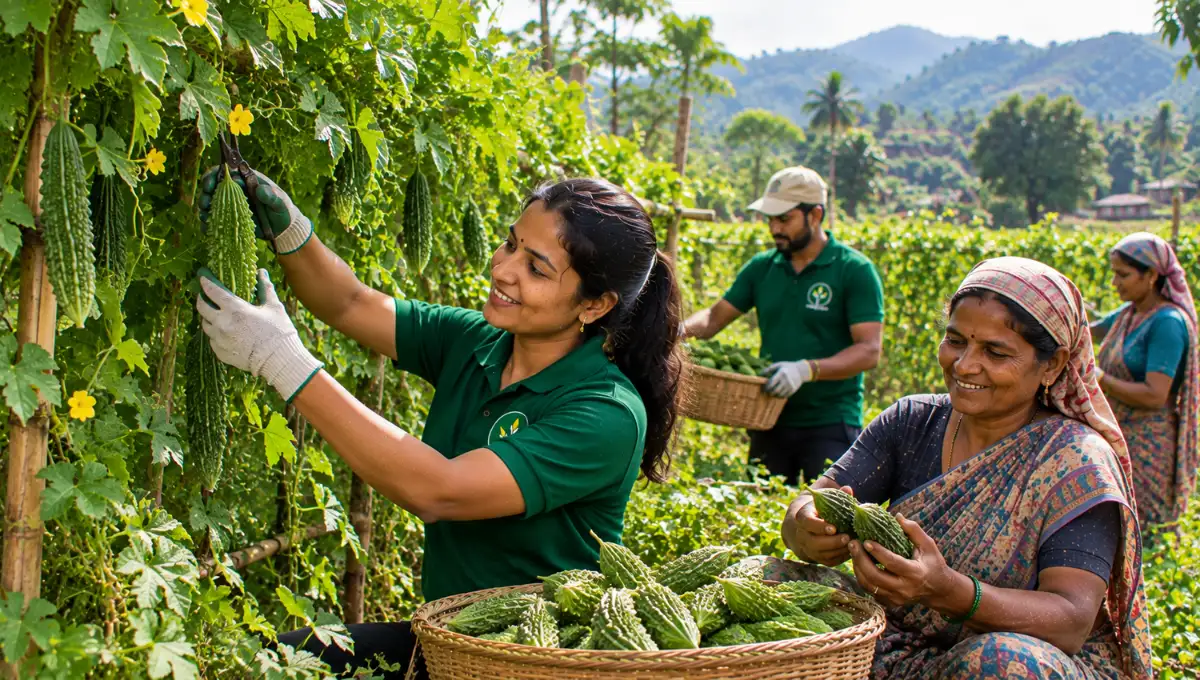
Karela Sourcing: How ACTIZEET® Selects Quality
Karela, better known outside India as bitter gourd or bitter melon, is not an ingredient anyone forgets once they have tasted it. That sharp, distinctive bitterness is exactly why sourcing matters so much, the wrong growing conditions or careless handling can leave a powder that is flat, inconsistent or simply unpleasant. Here is how ACTIZEET® approaches Karela sourcing, from vine to jar.
Karela, known botanically as Momordica charantia, has been grown and eaten across India for generations, showing up in everything from simple stir-fried sabzi to juices and, increasingly, dried powders aimed at a more convenient, shelf-stable form. India remains one of the world's largest producers of bitter gourd, with cultivation spread across a genuinely wide range of states and climates.
This article looks closely at Karela sourcing, where India's bitter gourd actually comes from, and how ACTIZEET® applies careful standards to every batch of Karela powder it produces.
What Is Karela and Why Sourcing Matters
Karela is a climbing vine in the cucurbit family, grown specifically for its immature, warty, tuberculate fruit, harvested well before it fully ripens, since the fruit becomes increasingly bitter and eventually inedible as it matures further. Its unmistakable sharp, bitter flavour is central to its identity, and it is precisely this bitterness that makes sourcing quality so important.
Fruit grown in poor conditions, harvested at the wrong stage, or dried carelessly afterward can produce a powder that is inconsistent, overly harsh, or lacking the balanced character that makes good Karela powder genuinely useful in cooking and traditional preparations. Careful sourcing is what keeps that character consistent, batch after batch.
Where Karela Grows Across India
Bitter gourd cultivation spans a genuinely wide swath of India. According to research published via ResearchGate, National Horticulture Board data for 2021-22 recorded Madhya Pradesh as the leading state by yield, with major cultivation also concentrated across Andhra Pradesh, Kerala, Tamil Nadu, Karnataka, Maharashtra and West Bengal.
More recent state-level data compiled by DesiKheti confirms Madhya Pradesh's continued lead in 2023-24, followed by Gujarat, with additional significant production spread across Chhattisgarh, Odisha, Uttar Pradesh, Bihar and several other states, underlining just how broadly this crop is grown across the country rather than being concentrated in a single region.
According to Vikaspedia, an Indian government-supported agricultural knowledge portal, major bitter gourd growing states also include Maharashtra, Gujarat, Rajasthan, Punjab and Assam, reflecting how well the crop adapts to a wide range of climates across the country, provided growing conditions are managed carefully.
How ACTIZEET® Approaches Karela Sourcing
Not every growing region produces Karela of equal quality, and ACTIZEET® prioritises sourcing from established growing belts with a strong track record for consistent yield and fruit quality, rather than sourcing opportunistically from wherever fruit happens to be cheapest in a given season.
Bitter gourd varieties differ noticeably in size, colour, ridge pattern and intensity of bitterness, from shorter, spindle-shaped fruit to longer, slender types more common in South India. ACTIZEET® sources with an understanding of these varietal differences, aiming for a consistent, balanced character rather than an unpredictable mix.
Karela is always harvested before full maturity, while the fruit is still tender and its bitterness is balanced rather than overwhelming. Timing matters significantly here, fruit picked too late becomes tougher and harsher, so ACTIZEET® sources from growers who harvest based on fruit maturity rather than a rigid, fixed schedule.
How Karela is dried significantly affects the final powder's colour, texture and overall quality. Rushed, high-heat drying can degrade natural compounds and leave an uneven, overly harsh result. ACTIZEET® favours suppliers who use controlled, lower-temperature drying methods designed to preserve a more balanced final product.
As a widely cultivated vegetable crop, bitter gourd can be exposed to pesticide use during conventional farming. ACTIZEET® verifies sourced Karela for purity and screens for pesticide residue before it moves forward in the supply chain, rather than relying solely on supplier assurances.
Working closely and directly with growers gives ACTIZEET® better visibility into farming practices, harvest timing and handling before the fruit ever reaches processing, supporting more consistent sourcing quality across different growing seasons.
Karela can be grown across multiple crop cycles in a year depending on the region, from summer sowing to kharif and rabi seasons in states like Kerala. ACTIZEET® adjusts its sourcing calendar around these regional planting cycles rather than assuming a single, uniform harvest window across the country.
Curious what carefully sourced Karela powder actually looks like?
Shop ACTIZEET® Karela PowderKarela Growing States at a Glance
| State | Growing Notes | Regional Character |
|---|---|---|
| Madhya Pradesh | India's leading producer by recent yield data | Central Indian growing conditions |
| Kerala | Bitter gourd is a staple vegetable, grown across three seasonal cycles | South Indian tropical climate |
| Gujarat | Among the top producing states by recent volume | Western Indian growing belt |
| Tamil Nadu & Karnataka | Long-standing cultivation with region-specific varieties | South Indian growing conditions |
| Uttar Pradesh & Bihar | Significant contributors to national production volume | North Indian plains growing belt |
From Fruit to Powder: How Karela Powder Is Made
ACTIZEET® Karela Powder begins with sourcing decisions made long before any drying or grinding takes place, choosing the right growing regions, verified suppliers and careful handling at every stage. That same attention to detail carries through into every batch we offer.
Explore ACTIZEET® Karela Powder →Harvesting and Initial Inspection
Fruit is harvested while still immature and inspected on arrival for freshness, size and overall quality before moving forward in the process. Any batch that does not meet the expected standard is set aside rather than pushed through regardless.
Cleaning and Controlled Drying
Accepted fruit is cleaned thoroughly, sliced, and undergoes a controlled drying process designed to preserve a balanced flavour and colour, avoiding the kind of rushed, high-heat drying that can leave an uneven or overly harsh result.
Grinding, Testing and Packaging
Once properly dried, the fruit is ground into a fine powder and undergoes a final quality and purity check before packaging, confirming that the finished Karela powder meets the standard ACTIZEET® sources for before it reaches the customer.
Frequently Asked Questions
Why Karela Sourcing Shapes the Final Product
Karela's sharp, distinctive character is not something a good recipe or careful grinding can create on its own, it depends entirely on where the fruit was grown, when it was harvested, and how carefully it was dried afterward. Thoughtful Karela sourcing is what separates a genuinely well-balanced powder from one that is simply harsh or inconsistent.
ACTIZEET® continues to treat sourcing as the foundation of quality for its Karela powder, batch after batch.
Sources referenced: ResearchGate, DesiKheti and Vikaspedia.
Latest from Our Blog

Anar Sourcing: How ACTIZEET® Chooses Quality Pomegranate
Discover how ACTIZEET® sources premium Anar (pomegranate) from India's top...

Green Apple Sourcing: From Himalayan Orchards to ACTIZEET Purity
Discover the story of Green Apple Sourcing for ACTIZEET Green...
Myrrh Sourcing: The Sacred Origin of ACTIZEET Myrrh Oil
Uncover the powerful story of myrrh sourcing for ACTIZEET Myrrh...
Cassia Sourcing – From Bark to Bold Wellness in Every Drop
Explore the bold, aromatic journey of cassia sourcing behind ACTIZEET...

