

Saffron Sourcing: How to Buy Pure, Traceable Kesar
Saffron is the most expensive spice in the world, and that is exactly why it is also one of the most faked. A few red threads can colour a whole pot of biryani, perfume a glass of kesar doodh or finish a festive sweet. But whether those threads are real, fresh and from where the label claims depends entirely on how the saffron was sourced. This guide explains saffron sourcing in clear, practical terms.
In Indian homes, kesar is more than a spice. It is part of weddings, festivals, temple offerings and family recipes passed down for generations. A pinch goes into kheer at Diwali, into shrikhand in Gujarat, into milk for expecting mothers and into the richest biryanis. Because it is so loved and so costly, buyers often pay premium prices without knowing what they are really getting.
Saffron sourcing covers everything that happens before saffron reaches your kitchen: the farm and region where the crocus grew, how the flowers were picked, how the threads were separated and dried, how the saffron was graded and tested, and how it was packed and labelled. Getting these steps right is the difference between deep red, fragrant, powerful saffron and dyed threads, dusty powder or a blend padded with cheaper material.
What Saffron Is and Why It Costs So Much
Saffron comes from the flower of Crocus sativus, a small purple autumn crocus. Each flower holds just three slender red stigmas, joined at the bottom to a pale yellow style. Those red stigmas, dried carefully, are the saffron threads we buy.
Nothing about this crop can be rushed or easily automated. The flowers bloom for only a few weeks each year, usually in October and November. They must be picked by hand early in the morning, before the sun wilts them. Then the stigmas are pulled out one flower at a time, again by hand. A study published in the journal Foods notes that producing a single kilogram of saffron needs anywhere from tens of thousands to several hundred thousand flowers, depending on conditions and quality (Bergomi et al., Foods, 2022, PMC). That huge amount of handwork is the real reason saffron is so precious.
What Gives Saffron Its Power
Three natural compounds define good saffron. Crocin gives the deep golden-red colour. Picrocrocin gives the slightly bitter, honey-like taste. Safranal gives the warm, hay-like aroma. The higher and better balanced these compounds are, the stronger and more valuable the saffron. Sourcing and handling directly affect all three.
What Saffron Sourcing Means
Saffron sourcing is the full journey of saffron from field to pack. It includes choosing the growing region and farms, checking harvest and drying practices, grading the threads, testing them in a lab, protecting them from light and moisture, and keeping records so every batch can be traced back to its origin.
In simple terms, good saffron sourcing answers these questions:
- Where did it grow? The country and region, such as Pampore in Kashmir or Khorasan in Iran.
- When was it harvested? Saffron loses strength over time, so freshness matters.
- Which part of the flower is it? Pure red stigma tips, or stigmas mixed with yellow styles.
- How was it dried and stored? Poor drying and light exposure weaken colour and aroma.
- Is it proven pure? Lab results showing colour strength and no adulteration.
Main Saffron Origins Compared
Saffron is grown in only a handful of regions with the right climate: dry summers, cold winters and well-drained soil. Iran is by far the largest producer. The same Foods study reports that Iran grows more than 160 tonnes a year, around 90 percent of the world's saffron (Foods, 2022). Smaller but highly valued supplies come from India, Spain, Afghanistan, Greece and Morocco.
| Origin | Key Growing Areas | Character | Sourcing Notes |
|---|---|---|---|
| India (Kashmir) | Pampore, Budgam, Srinagar, Kishtwar | Long, thick, deep maroon threads; strong aroma and colour | GI-tagged; limited supply, high price; check for GI and origin proof |
| Iran | Khorasan provinces | Bright red, good colour strength | Largest supply; quality ranges widely by grade and exporter |
| Afghanistan | Herat and nearby provinces | Deep red, often well regarded in tests | Growing producer; confirm traceability |
| Spain | La Mancha | Rich aroma, usually lower colour than Kashmiri or Iranian | Protected origin label; watch for re-labelled imported saffron |
| Greece and Morocco | Kozani; Taliouine | Distinct aroma, smaller volumes | Niche origins with their own protected labels |
Origin alone does not guarantee quality. Excellent and poor saffron exist in every region. What matters is the honesty and care of the supply chain, and proof to back up the label.
Kashmir Saffron and the GI Tag
India's saffron story is centred on the high, terraced plateaus called karewas around Pampore in south Kashmir. Families here have grown saffron for centuries, and Kashmiri kesar is known for its long, thick, deep red threads and strong aroma.
In 2020, Kashmir Saffron received a Geographical Indication (GI) tag, registered as GI No. 635. According to a report at the time, officials said the tag lifted the price from around Rs 1.4 lakh to Rs 2.1 lakh per kilogram, and about 32,000 registered growers were to receive GI codes for their produce to improve traceability (The Tribune).
Why the GI Tag Matters for Buyers
Kashmir produces far less saffron than India consumes, so imported saffron has long been sold as "Kashmiri." The GI tag helps protect genuine Kashmir saffron from this kind of mislabelling. Combined with testing and grading facilities at the India International Kashmir Saffron Trading Centre in Pampore, it gives buyers a better way to confirm what they are paying for. If a seller claims Kashmiri origin, it is fair to ask for GI-linked proof.
Challenges Facing Kashmir Saffron
Kashmir saffron has faced falling yields over the years because of irregular rainfall, ageing corms, and saffron land being turned to other uses. Government programmes such as the National Saffron Mission have supported irrigation, better corms and improved practices. Choosing genuine Kashmir saffron, sourced fairly, helps keep this heritage crop viable for growers.
Understanding Saffron Grades
Saffron is graded mainly by how much of the red stigma it contains and how much of the paler yellow style is left attached. More red means more colour, flavour and aroma. Different regions use their own grade names.
| Grade Name | Region | What It Contains | Quality Level |
|---|---|---|---|
| Mongra | Kashmir | Only the deep red stigma tips, no style | Highest |
| Lacha | Kashmir | Red stigmas with some yellow style attached | Good |
| Guchhi / Zarda | Kashmir | Bundled threads or mostly yellow style | Lower |
| Super Negin / Negin | Iran | Long, all-red, carefully cut threads | Highest |
| Sargol | Iran | Red tips only, shorter threads | Very high |
| Pushal | Iran | Red stigmas with a little yellow style | Good |
| Bunch / Dasteh | Iran | Whole stigma and style tied in bundles | Moderate |
Yellow style is not fake, but it has almost no colour or aroma. A product with lots of yellow threads should cost less than an all-red grade. Paying Mongra or Negin prices for Lacha or Pushal is one of the most common ways buyers lose money.
Seven Steps of Responsible Saffron Sourcing
Here is what a careful saffron supply chain looks like, from the crocus field to the sealed jar.
Responsible sourcing starts with knowing exactly where the saffron grew, ideally down to the region and grower group. For Kashmir saffron, this means GI-linked records. For imported saffron, it means clear country of origin, exporter details and import documents. Vague claims like "premium imported" are not enough.
Flowers should be picked early in the morning, as soon as they open, and handled gently in clean baskets. Flowers left in the sun or piled up for hours lose aroma and colour. Stigmas should be separated on the same day, in clean conditions, so they do not pick up dust or moisture.
Skilled workers, often women in grower families, pull the stigmas from each flower and cut them to the desired grade. The more carefully the yellow style is removed, the higher the grade. This step decides much of the final value and is where honest grading begins.
Fresh stigmas hold a lot of moisture and must be dried quickly but gently. Traditional shade drying, low-heat drying or controlled dryers are used, depending on the region. Under-dried saffron grows mould; over-heated saffron loses aroma and turns dull. Well-dried threads are brittle, glossy and deep red.
Reputable suppliers send each lot for testing. This confirms colour strength, aroma and bitterness, checks moisture, and screens for added dyes, foreign plant material and other adulterants. Results are recorded in a Certificate of Analysis linked to the batch number.
Light, heat, air and moisture all break down saffron's compounds. Good saffron is packed in airtight, light-protective containers such as dark glass or sealed tins, in clean conditions. Clear plastic packs that sit under shop lights for months are a poor home for an expensive spice.
The label should state origin, grade, net weight, harvest or packing date, best-before date, batch number and FSSAI licence. It should not call imported saffron Kashmiri. Fair prices to growers, many of whom are small family farmers, keep the whole supply chain honest and sustainable.
Looking for kesar you can trust? Explore ACTIZEET® Saffron (Kesar).
Shop ACTIZEET® SaffronLab Testing and ISO 3632
The global reference for saffron quality is the international standard ISO 3632. It uses a simple lab method that measures how strongly a saffron solution absorbs light at certain wavelengths. This gives three key scores: colouring strength from crocin, bitterness from picrocrocin and aroma from safranal. Based on these and other checks, saffron is placed into quality categories, with Category I being the best (Foods, 2022).
| Test | What It Measures | Why It Matters |
|---|---|---|
| Colouring strength (crocin) | How much golden-red colour the saffron releases | The main measure of saffron strength and grade |
| Bitterness (picrocrocin) | The compound behind saffron's taste | Shows flavour quality and freshness |
| Aroma (safranal) | The compound behind saffron's scent | Low values suggest old or poorly stored saffron |
| Moisture and volatile matter | Water left in the threads | Excess moisture adds weight and risks mould |
| Floral waste and foreign matter | Yellow style, petals, other plant parts | Shows grading honesty and cleanliness |
| Artificial colour screening | Synthetic dyes | Detects one of the most common frauds |
Researchers also point out that no single test catches every type of fraud, so serious suppliers often combine the ISO method with other techniques such as microscopy and advanced chemical analysis. When a seller shares a recent Certificate of Analysis with ISO 3632 results, you can compare saffron objectively rather than relying on looks alone.
How Saffron Is Faked
Because saffron sells by the gram at high prices, fraud is common. Scientific reviews list a range of adulterants, from synthetic dyes to weight-adding liquids. The main tricks to know about are:
- Look-alike plant parts. Safflower petals, marigold petals, corn silk or shredded coconut fibres dyed red.
- Dyed threads. Real but low-grade saffron, or yellow styles, coloured with artificial red dye.
- Weight padding. Threads coated with glycerine, honey, syrup or oil to make them heavier and shinier.
- Mixed grades. High-grade threads on top, cheaper threads or yellow styles underneath.
- Old saffron. Saffron that has lost its aroma, sold as fresh stock.
- Origin fraud. Imported saffron re-packed and sold as Kashmiri or Spanish.
- Adulterated powder. Ground saffron mixed with turmeric, paprika or other colouring spices.
Powdered saffron is especially easy to adulterate, which is why most experts advise buying whole threads unless the powder comes from a supplier you trust and can verify.
Simple Home Tests for Real Saffron
Home tests cannot replace a lab, but they can catch the most obvious fakes. Try these with a few threads.
The Water Test
Drop a few threads into a small glass of warm water. Real saffron slowly releases a golden-yellow colour over several minutes, and the threads themselves stay red. Fake or dyed saffron usually bleeds red colour quickly, and the threads may turn pale or white.
The Look and Feel Test
Real saffron threads are trumpet-shaped, slightly wider at one end, and feel dry and brittle. Threads that are perfectly uniform, oily, sticky or soft deserve suspicion. Rub a thread between wet fingers: real saffron leaves a yellow-orange stain, not a red one.
The Smell and Taste Test
Real saffron smells warm, honeyed and slightly hay-like. Taste a single thread and you should notice a mild bitterness, not sweetness. A sweet taste can point to sugar coating, and a total lack of aroma suggests old or fake saffron.
The Price Test
Genuine saffron is never cheap. If a seller offers "pure Kashmiri kesar" at a fraction of the market rate, the product is almost certainly diluted, mislabelled or fake.
At ACTIZEET®, we believe something as precious as saffron deserves complete honesty. That is why we care about the questions in this guide: where kesar comes from, how it is graded, how it is stored and whether it is truly pure. ACTIZEET® Saffron (Kesar) is made for people who want real saffron in their kitchen and rituals.
Explore ACTIZEET® Saffron →Storing and Using Saffron Well
Good saffron can lose much of its strength if stored poorly. A few simple habits protect your investment.
- Keep saffron in an airtight, light-proof container, away from heat and sunlight.
- Store it in a cool, dry cupboard. Avoid the area near the stove.
- Try to use it within a year or so of purchase for the best colour and aroma.
- Soak threads in a few spoons of warm water or milk for 10 to 20 minutes before adding to food. This draws out colour and flavour evenly.
- Use only a small pinch. Good saffron is strong, and too much can taste bitter or medicinal.
- Crush threads lightly with a pinch of sugar in a mortar if you want a quicker, more even release.
- Saffron in normal food amounts is widely used, but pregnant women and anyone on medication should speak with a doctor before taking it in larger, supplement-style amounts.
Frequently Asked Questions
Real Kesar Starts With Honest Sourcing
Saffron carries centuries of tradition in every thread, from the karewas of Pampore to festival kitchens across India. Its price reflects an enormous amount of careful handwork, and that same value attracts fraud. Knowing the origin, understanding grades, insisting on testing and watching for red flags are the best ways to make sure the saffron you buy is real, fresh and worth every rupee.
At ACTIZEET®, we believe the story behind a spice matters as much as its colour and aroma. If you are looking for kesar to bring into your kitchen and celebrations, take a look at ACTIZEET® Saffron (Kesar).
References: Bergomi A. et al. Determination of Saffron Quality through a Multi-Analytical Approach. Foods, 2022 (PMC); The Tribune, GI tag boosts market value of Kashmir saffron, May 2020.
Latest from Our Blog
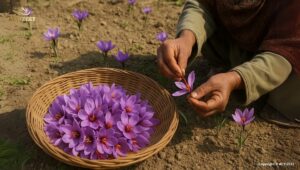
Saffron Sourcing: The Precious Path to ACTIZEET Saffron Oil
Explore the rare and radiant story of saffron sourcing for...
Basil Sourcing From Sacred Soil to Soothing Essence
Discover the ethical and traditional journey of basil sourcing behind...
Brahmi Sourcing: The Complete Guide to Quality, Origin, and Potency
Discover everything about Brahmi sourcing — where Bacopa monnieri grows,...
Bela Sourcing – From Fragrant Blossoms to Healing Drops
Uncover the journey of Bela Sourcing for ACTIZEET Bela Oil....

