Where Water Is Life—And Learning
You arrived in the village during summer. The sun was harsh, the ground dry, and children cupped their hands at a small hand pump, waiting their turn.
It hit you then—clean water isn’t just about quenching thirst. It’s about dignity, health, and hope.
And in places where access is limited, understanding how to keep it clean is even more important.
This is the story of how ACTIZEET’s community outreach is bringing water and hygiene education to the last mile—starting not with infrastructure, but with awareness.
The First Realization: What We Take for Granted
You’ve never had to question your water—whether it’s clean, where it comes from, how to store it safely. But here, every drop is watched. Carried. Preserved.
And often—contaminated without anyone knowing.
During your first hygiene session with ACTIZEET’s team, you asked a classroom of children:
“Do you wash your hands before eating?”
Only half raised their hands.
“Do you know why it matters?”
Only silence.
That’s when you realized—this wasn’t about telling people what to do. It was about showing them why it matters.
Why Hygiene Education Matters in Rural Areas
Many water-borne diseases are preventable. But in rural India, poor hygiene habits continue to affect lives—especially children’s.
- Diarrhea is still a leading cause of child mortality
- Unfiltered or open-stored water carries infections
- Lack of menstrual hygiene education affects school attendance for girls
- Open defecation, though decreasing, remains a concern
ACTIZEET knew the solution wasn’t just building toilets or tanks.
It was education that sticks. Habits that stay.
A Typical Day: A Lesson in a Courtyard
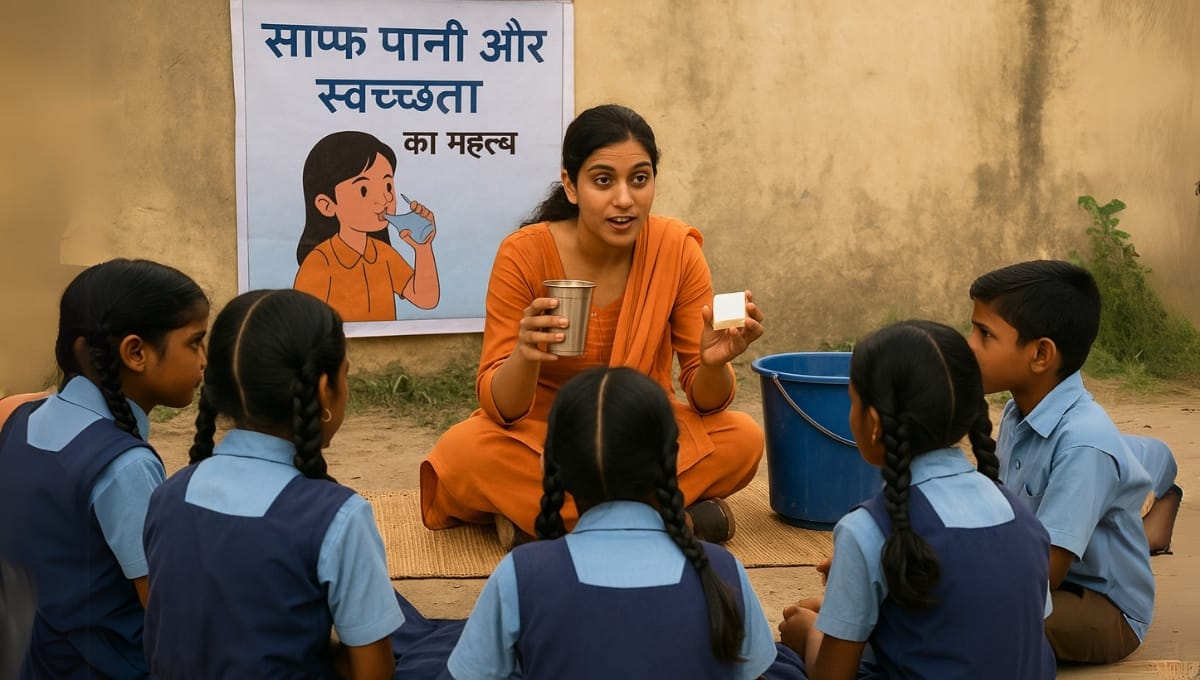
You began the day under a banyan tree. Children gathered, sitting on mats. Mothers stood in the shade behind.
You carried nothing fancy. Just a bar of soap, a steel tumbler, a bucket, and a few printed cards.
You started with a story:
“Once upon a time, a little girl drank water from a pot. She didn’t check if it was covered. She didn’t wash her hands after playing. That night, her stomach hurt…”
The kids were wide-eyed.
Then you asked, “What could she have done differently?”
The answers came slowly, then more quickly.
The learning had begun.
ACTIZEET’s Approach: Education with Empathy
✅ Child-Led Demonstrations
Children are the best change-makers. ACTIZEET’s model encourages them to:
- Demonstrate handwashing steps
- Test water with simple kits
- Show how to store water in covered vessels
- Create “Hygiene Patrols” for classrooms
They learn. They teach. They lead.
✅ Menstrual Hygiene Workshops
For adolescent girls, female health workers host confidential, safe discussions.
They talk about:
- Clean cloth usage
- Disposal techniques
- Breaking taboos
One girl told you quietly, “I didn’t know I could ask questions. Now I can.”
That moment mattered.
✅ Visual and Cultural Tools
Posters with local characters. Puppet shows in local dialect.
Songs about handwashing that children sing at home.
You saw it work—when a grandmother nodded along to a rhyme about boiling water before drinking.
It’s not about high-tech—it’s about high connection.
The Soap Experiment That Changed Everything
One afternoon, you conducted a simple demo.
You dipped children’s hands in colored powder. Then asked them to wash with plain water. The color stayed.
Then, you used soap. The color vanished.
Their eyes widened.
A boy said, “Now I get why Didi says use sabun.”
You smiled. Because science had just met storytelling.
And it worked.
The Story of Ramu’s Family
You met Ramu, a 10-year-old boy with a cheeky grin. His mother, Sita, told you that before ACTIZEET’s visit, the family never filtered their water.
“Now he reminds me every day—cover the pot, wash hands,” she said, laughing.
Ramu even made a sign: “Yahan saf paani rakho.”
(Keep clean water here.)
One child. One lesson. Whole family changed.
Community Challenges—and How ACTIZEET Responds
It’s not always smooth. You’ll meet resistance:
- “We’ve done it this way forever.”
- “We don’t get sick often.”
- “Boiling water takes time.”
But ACTIZEET doesn’t argue. They demonstrate. Gently. Respectfully.
- Showing worms in unfiltered water
- Tracking attendance drops from stomach flu
- Inviting respected elders to support hygiene drives
It’s not about fear. It’s about understanding.
School Partnerships: Where Change Begins Early
ACTIZEET’s hygiene education is integrated into school routines:
- Morning handwashing lines
- Daily “clean water duty”
- Essay competitions on water protection
You saw one class create a poster with a tulsi plant and a drop of water: “Jeevan dono se banta hai.”
(Life is made from both.)
The teacher said, “They’ve started reminding me too now!”
That’s real change.
What You Learned Alongside the Children
🌿 Hygiene isn’t instinct—it’s taught
And like all habits, it grows with practice and praise.
🌿 Culture matters
If you respect tradition, people will listen when you suggest change.
🌿 Even a single bar of soap can be revolutionary
When it comes with care, with explanation, with dignity.
ACTIZEET’s Long-Term Vision for Hygiene Education
This isn’t a campaign. It’s a commitment.
ACTIZEET continues to:
- Support clean water access projects
- Train schoolteachers as hygiene ambassadors
- Equip families with water testing strips
- Distribute herbal soaps made locally
And most importantly—build habits that last beyond the workshop.
Conclusion: When a Drop Teaches a Lifetime
You left the village with dust on your clothes and a new lens on your life.
Now, each time you pour a glass of clean water, you think of Ramu.
Each time you wash your hands, you remember the powder experiment.
Each time you see a bar of soap—you see change.
Teaching hygiene isn’t about statistics.
It’s about stories.
And it begins, always, with listening—then showing.
Because in rural India, one clean habit can ripple through a generation.