

Stress Relief Practices from the Heart of the Himalayas
For centuries, people have climbed into the Himalayas looking for peace. Sages meditated in its caves, monks built monasteries on its ridges and villagers shaped calm, steady lives around its seasons. You do not need to move to the mountains to borrow their wisdom. Many of the simplest stress relief practices from Himalayan life can fit into a busy city day, a crowded home or a small village routine.
Stress has become a constant companion for many people. Work deadlines, money worries, long commutes, exam pressure, family responsibilities and endless phone notifications keep the mind running from morning to night. Over time, this constant pressure shows up as poor sleep, headaches, irritability, tiredness and a feeling of never quite being able to switch off.
The Himalayas offer a different rhythm. Life there moves with the sun, the seasons and the needs of the land. People breathe clean air, walk every day, eat simple food, rest when it gets dark and lean on each other. This article brings together practical stress relief practices inspired by that way of life. They are simple, free and grounded in both tradition and modern research, and you can start most of them today.
Understanding Stress
Stress is the body's natural response to pressure or threat. When we face a challenge, the body releases hormones such as adrenaline and cortisol. The heart beats faster, breathing quickens and muscles tense, preparing us to act. In short bursts, this response is useful. It helps us meet deadlines, react quickly and stay alert.
Problems begin when stress never switches off. Ongoing stress can disturb sleep, digestion and mood, lower energy and make it harder to concentrate. It may also contribute to headaches, muscle pain and high blood pressure over time. The goal of stress relief is not to remove every challenge from life, which is impossible, but to help the body and mind return to a calm, balanced state more often and more easily.
Common Signs of Stress
- Trouble falling or staying asleep, or waking up tired.
- Feeling irritable, restless or easily overwhelmed.
- Headaches, a tight jaw, or tension in the neck and shoulders.
- Racing thoughts and difficulty focusing.
- Changes in appetite, either eating much more or much less.
- Pulling away from friends, family or activities you used to enjoy.
Why the Mountains Feel So Calming
Anyone who has spent a few days in the hills knows the feeling. The mind slows down. Sleep comes more easily. Small worries seem to shrink against the size of the peaks. Part of this is simply a break from routine, but part of it comes from things science is beginning to explain.
Time in natural surroundings appears to have real effects on the body and mind. A systematic review published in Environmental Health and Preventive Medicine looked at 28 studies on "forest bathing," the practice of slowly spending time among trees. It found that forest bathing was linked with improvements in stress-related hormone and heart measures, better mood and noticeably lower anxiety and depression, although the authors called for more high-quality research (Wen et al., 2019).
Mountain life also builds in many habits that support calm: daily walking, natural light, regular sleep, physical work, simple meals and close community ties. The practices below borrow from these habits so you can bring some of that mountain calm into your own life.
Eight Stress Relief Practices from the Himalayas
Breath is the fastest bridge between the body and the mind. When we are stressed, breathing becomes quick and shallow. Slowing it down sends a signal to the nervous system that it is safe to relax. Himalayan yogic traditions developed many breathing practices, called pranayama. Three simple ones are a good place to start:
- Slow belly breathing: Sit comfortably, place a hand on your belly, breathe in through the nose for a count of four and breathe out slowly for a count of six. Repeat for five minutes.
- Nadi Shodhana (alternate nostril breathing): Close the right nostril with your thumb and breathe in through the left. Close the left and breathe out through the right. Breathe in through the right, then switch. Continue gently for a few minutes.
- Bhramari (humming bee breath): Breathe in deeply, then hum softly like a bee as you breathe out. The gentle vibration can feel very soothing, especially before sleep.
Practise gently and never strain. If you feel dizzy, return to normal breathing. People with heart, lung or blood pressure conditions, or who are pregnant, should check with a doctor before trying breath-holding techniques.
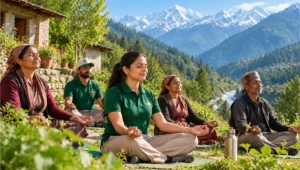
Meditation has deep roots across the Himalayas, from yogic traditions in Uttarakhand to Buddhist monasteries in Ladakh, Sikkim and Himachal Pradesh. At its simplest, meditation means sitting quietly and paying gentle attention, often to the breath. When the mind wanders, which it always will, you simply bring it back without judging yourself.
Research supports this ancient habit. The US National Center for Complementary and Integrative Health notes that some research suggests meditation may help reduce blood pressure, anxiety, depression and insomnia (NCCIH). Start with just five minutes a day, ideally at the same time, and slowly build up. Consistency matters far more than duration.
In mountain villages, walking is part of daily life: to the fields, to the spring, to the temple, to a neighbour's house. These walks are rarely rushed. Try a "mindful walk" in the nearest green space. Leave your phone in your pocket, walk a little slower than usual and notice what is around you: the colour of leaves, the sound of birds, the feel of the breeze and the ground under your feet. Even 20 to 30 minutes in a park, along a tree-lined road or by a lake can lift mood and quiet a busy mind.
Mountain people rarely need gyms because their days are naturally active. For most of us, gentle movement helps release the tension that stress stores in the body. Simple yoga postures such as Balasana (child's pose), Marjaryasana-Bitilasana (cat-cow), Viparita Karani (legs up the wall) and Shavasana (relaxation pose) can loosen tight muscles and calm the mind. Combine them with daily walking, stair climbing, gardening or household work. Any regular movement that you enjoy is better than intense exercise you avoid.
In many Himalayan villages, the day begins at sunrise and slows down after sunset. This natural rhythm supports deep, regular sleep, which is one of the strongest protections against stress. Try to wake and sleep at similar times each day, get some morning sunlight, dim lights in the evening and keep screens away for at least 30 to 60 minutes before bed. A short evening routine, such as washing your face and feet, a few minutes of breathing and a warm drink, can tell your body that it is time to rest.
Traditional mountain meals are simple: millets like mandua, local pulses, seasonal greens, buttermilk, home-made ghee in small amounts and warm soups. Regular, home-cooked meals keep blood sugar steady, which helps keep mood steady too. Cut down on excess caffeine, sugary snacks and late-night heavy meals, which can make anxiety and poor sleep worse. A warm cup of herbal tea, such as tulsi or ginger, can be a calming evening ritual. Think of it as a pause for the mind rather than a cure.
Walk past a Himalayan monastery or temple and you may hear chanting, bells or the slow turning of prayer wheels. Repetitive sound, whether chanting "Om," reciting a prayer, humming or listening to calm music, can help focus the mind and slow the breath. If chanting does not suit you, try sitting quietly with soft instrumental music, natural sounds like flowing water or simply a few minutes of silence. The point is to give the mind one gentle thing to rest on.
In mountain villages, nobody gets through a hard winter alone. Families share work, neighbours share meals and festivals bring everyone together. Strong social connection is one of the most powerful buffers against stress. Make time for people who make you feel calm and supported. Share a meal, call an old friend, join a walking group, volunteer or simply talk honestly about how you feel. Asking for help is not weakness. It is how communities have always survived hard seasons.
Small daily rituals make a big difference. Explore everyday wellness essentials from ACTIZEET®.
Explore ACTIZEET®Why These Stress Relief Practices Work Best Together
Each of these stress relief practices helps on its own, but they are strongest when combined. Slow breathing calms the body in the moment. Meditation trains the mind to notice stress earlier. Walks and gentle movement release physical tension. Good sleep and steady meals give the body the energy to cope. Community reminds us that we are not facing life alone. Himalayan villagers do not think of these as separate "techniques." They are simply part of a balanced day. That is the real lesson: stress relief works best when it becomes a way of living, not an emergency fix.
A 7-Day Himalayan Calm Plan
Trying everything at once can itself become stressful. This simple seven-day plan adds one new practice each day while keeping the ones before it. By the end of the week, you will have a small, steady routine.
| Day | New Practice | Time Needed |
|---|---|---|
| Day 1 | Five minutes of slow belly breathing after waking | 5 minutes |
| Day 2 | A 20-minute mindful walk without your phone | 20 minutes |
| Day 3 | Five minutes of sitting meditation | 5 minutes |
| Day 4 | Gentle yoga stretches before bed | 10 minutes |
| Day 5 | No screens for 30 minutes before sleep | 30 minutes |
| Day 6 | Cook and eat one slow, home-made meal with family or friends | 1 hour |
| Day 7 | Spend time outdoors in nature and write down three things you are grateful for | 30 to 60 minutes |
Bringing Mountain Calm to City Life
Most of us cannot live in a Himalayan village, but we can borrow its spirit. Here are practical ways to make these practices fit a busy urban life.
Create Small Pockets of Stillness
Take three slow breaths before opening your laptop, starting the car or entering a meeting. Use waiting time in queues or traffic for a minute of breathing instead of scrolling.
Bring Nature Indoors and Nearby
Keep a few plants at home or on your desk. Open a window in the morning. Find the nearest park, lake or tree-lined street and make it part of your weekly routine.
Set Digital Boundaries
Turn off non-essential notifications. Keep phones out of the bedroom if possible. Choose one day a week, or a few hours each weekend, as a lighter screen time, the way mountain life naturally has fewer distractions.
Do One Thing at a Time
Mountain work, whether ploughing a field or making tea, is usually done with full attention. Try single-tasking: eat without your phone, listen without planning your reply, and finish one task before starting the next.
Simplify Where You Can
Mountain households own less and waste little. Clearing clutter from a room, a schedule or a to-do list can make the mind feel lighter. Say no to commitments that drain you without real purpose.
ACTIZEET® Cares believes wellness should be simple, natural and within everyone's reach. The quiet wisdom of Himalayan communities reminds us that calm often comes not from adding more, but from slowing down, breathing deeply and staying connected to nature and each other.
Learn More About ACTIZEET® Cares →When to Seek Help
Self-care practices are helpful, but they are not a replacement for professional support. Please speak with a doctor, counsellor or mental health professional if stress or worry lasts for weeks, if you feel hopeless or unable to cope, if sleep or appetite changes sharply, or if stress is affecting your work, studies or relationships. In India, Tele MANAS offers free, confidential mental health support around the clock. You can call 14416 or 1-800-891-4416. If you ever have thoughts of harming yourself, please reach out to someone you trust or a helpline right away.
Frequently Asked Questions
Carry the Mountains Within
The Himalayas teach a quiet lesson about stress: calm is not something you find once and keep forever. It is something you return to, again and again, through simple daily habits. A few slow breaths, a quiet moment of stillness, a walk under the trees, a good night's sleep, a warm meal and an honest conversation with someone who cares. These small practices, repeated with patience, can help you carry a little of the mountains' steadiness wherever you go.
ACTIZEET® Cares will keep sharing wellness wisdom from mountain communities, because a calmer mind is the foundation of a healthier life.
Sources referenced: Wen Y. et al. Medical empirical research on forest bathing (Shinrin-yoku): a systematic review. Environmental Health and Preventive Medicine, 2019 and National Center for Complementary and Integrative Health, Mind and Body Approaches for Stress and Anxiety.
Latest from Our Blog

The Role of Nutrition in Preventive Healthcare
Understand how everyday nutrition choices support preventive healthcare and long-term...

What Makes Herbal First Aid Kits So Powerful
Discover what makes herbal first aid so effective, from traditional...
Stress Relief Practices from the Heart of the Himalayas
Simple stress relief practices from Himalayan life: pranayama, meditation, mindful...

Understanding Ayurveda: Wellness the Traditional Way
Explore the essence of Ayurveda with ACTIZEET Cares. Learn how...

