
How We Planted 18,500 Trees in One Year
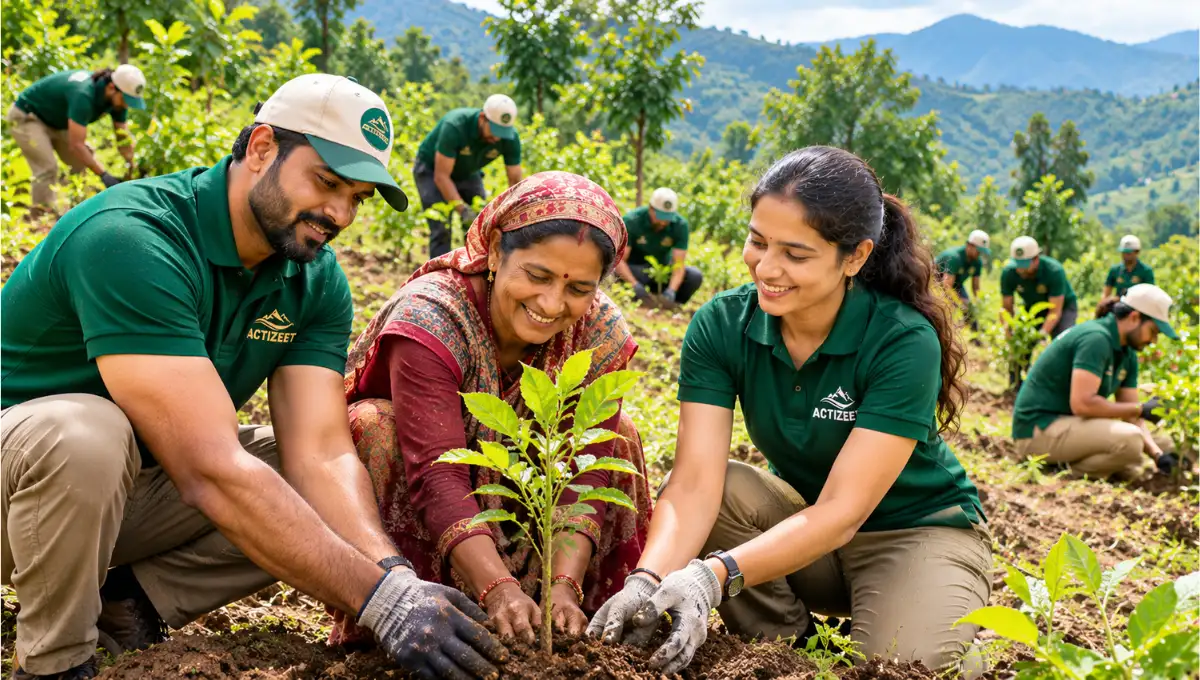
Eighteen thousand five hundred saplings. 53 sites across 13 districts and 4 states. Farmers, students, women's groups, panchayats and volunteers pressing soil around young roots. This is the story of how ACTIZEET® Cares planted 18,500 trees in a single year: why we did it, how we did it, who made it possible, what we learned, and why the real work begins after planting day.
Every tree begins as something small: a seed in a nursery bed, a sapling in a black polybag, a hope that it will survive its first summer. Planting one tree is easy. Planting 18,500 trees, and making sure they have a real chance to grow, takes planning, patience and a whole community working together.
Over the past year, from July 2025 to August 2026, ACTIZEET® Cares set out to do exactly that. Our goal was not just to reach a big number. It was to plant the right trees in the right places, with the people who would care for them, and to keep checking on them long after the photographs were taken.
This report shares how that journey unfolded, in plain and honest terms.
In one year, ACTIZEET® Cares planted 18,500 trees across 53 sites in 13 districts and 4 states, using 6 native and useful species: Neem, Jamun, Amla, Arjuna, Bael and Moringa. The drive brought together 102 farmers, 11 women's groups, 7 schools, 34 volunteers, 42 panchayats and 17 nurseries. At our latest check, 82% of the trees had survived. Our approach focused on native species, community ownership, protection from grazing, regular watering and survival monitoring, because a tree planted is only a success if it grows.
Why We Committed to Planting Trees
Across India, communities are feeling the effects of a changing environment. Summers are getting hotter, groundwater is dropping in many regions, soils are losing fertility, and green cover around villages and towns is shrinking. Farmers face more uncertain seasons. Children walk to school along roads with little shade.
Trees cannot solve all of these problems on their own, but they help with many of them at once. They provide shade and cooler surroundings, protect soil from erosion, help rainwater soak into the ground, support birds, bees and other wildlife, and can offer fruit, fodder, fuel and income to the families who care for them.
For ACTIZEET® Cares, tree planting also connects closely to our roots. Our work grows from a deep respect for plants and herbs, and for the farming communities who grow them. Giving back to the land felt like a natural step.
Our Guiding Principles
Before a single sapling went into the ground, we agreed on a few principles to guide every decision:
- Right tree, right place: Choose species that suit the local soil, rainfall and climate, and that the community actually wants.
- Native first: Prefer native and naturalised species that support local ecosystems and are better adapted to local conditions.
- Useful trees: Include fruit, fodder and medicinal trees that give people a reason to protect them.
- Community ownership: Plant with, not for, local people, so that someone nearby feels responsible for each tree.
- Care after planting: Plan for watering, protection and replacement from the very beginning.
- Measure honestly: Track not just how many trees we planted, but how many survive.
How We Did It: Step by Step
Step 1: Choosing Sites With the Community
We began by identifying places where trees were needed and where they could be protected. These included village common lands, farm boundaries and school campuses. Working with 42 panchayats, we met local leaders, farmers, teachers and residents to understand their needs, agree on where to plant and decide who would look after the saplings.
Step 2: Selecting the Right Species
We chose six hardy, well adapted species that suit a wide range of Indian conditions and that communities value: Neem for shade and resilience, Jamun and Amla for fruit, and Arjuna, Bael and Moringa for their traditional medicinal and nutritional value.
Step 3: Sourcing Healthy Saplings
Healthy saplings survive better. We sourced saplings from 17 nurseries, choosing plants that were strong, disease free and of a good size for transplanting.
Step 4: Preparing the Ground
Pits were dug ahead of the planting season, allowed to air, and filled with a mix of soil and organic manure to give each sapling a good start. Where water was scarce, the aim was to help each pit capture and hold as much rainwater as possible.
Step 5: Planting at the Right Time
The drive began in July 2025, at the start of the monsoon, when rain helps young roots settle in. Planting drives brought together volunteers, students, farmers and families, turning each event into a community celebration.
Step 6: Protecting Young Trees
Grazing animals are one of the biggest threats to young saplings. At each site, we worked with panchayats and local communities to keep animals away from saplings during the first critical years.
Step 7: Watering and Aftercare
The first dry season decides whether a sapling lives or dies. Local caretakers, families and school groups took responsibility for watering, weeding and loosening the soil around each tree.
Step 8: Monitoring and Replacement
We regularly visited planting sites to check tree health and count survival. Saplings that did not make it were replaced in the next suitable season.
Where We Planted
The 18,500 trees were spread across 53 sites in 13 districts and 4 states. Spreading the effort across many smaller sites, rather than one large plantation, meant that each group of trees had a nearby community to look after it.
| Measure | Figure |
|---|---|
| Trees planted | 18,500 |
| Planting sites | 53 |
| Districts | 13 |
| States | 4 |
| Average trees per site | About 350 |
| Panchayats involved | 42 |
| Nurseries supplying saplings | 17 |
| Period | July 2025 to August 2026 |
Sites included village common lands, the farm boundaries of 102 farmers and the campuses of 7 schools, with the number of trees at each site matched to the space available and the community's capacity to care for them.
The Trees We Chose
We focused on six native and useful species. Each one is well suited to Indian conditions, valued by local communities and linked to India's rich tradition of plants and herbs.
| Tree | Botanical Name | Why We Chose It |
|---|---|---|
| Neem | Azadirachta indica | Hardy, drought tolerant and long lived, with deep shade and a long history of traditional use |
| Jamun | Syzygium cumini | Fruit for families and wildlife, and a large, shady canopy |
| Amla | Phyllanthus emblica | Fruit rich in vitamin C, with value for families and herbal livelihoods |
| Arjuna | Terminalia arjuna | A traditional medicinal tree that grows well along water bodies and field edges |
| Bael | Aegle marmelos | Sacred, hardy and fruit bearing, with deep roots in Indian tradition |
| Moringa | Moringa oleifera | Fast growing, with nutritious leaves and pods that families can use quickly |
Mixing species makes plantations more resilient to pests, diseases and changing weather, and supports a wider range of birds and insects. We avoided invasive species and large single species blocks, focusing instead on trees that belong in each landscape and give communities a reason to protect them.
Our connection to plants runs deep, from the herbs we care about to the trees we plant.
Discover the ACTIZEET® Herbal RangeThe People Who Made It Happen
18,500 trees were not planted by one organisation. They were planted, and are being cared for, by a wide network of people and partners.
| Who | Number | Role |
|---|---|---|
| Farmers | 102 | Planted and cared for trees on their farm boundaries |
| Women's groups | 11 | Helped plant and look after saplings in their communities |
| Schools | 7 | Students planted and adopted trees on their campuses |
| Volunteers | 34 | Supported planting drives and site visits |
| Panchayats | 42 | Helped identify sites and protect saplings |
| Nurseries | 17 | Supplied healthy saplings |
Farmers
102 farmers planted trees along their field boundaries. Fruit and medicinal trees such as Jamun, Amla, Bael and Moringa are an investment in future food and income, as well as better shade and soil for their crops.
Women's Groups
11 women's groups took part in planting and caring for saplings in their villages. Their involvement helps make sure trees near homes and community spaces are watched over every day.
Schools and Students
Students from 7 schools planted trees on their campuses and took responsibility for looking after them, learning first hand how a tree grows.
Panchayats, Nurseries and Volunteers
42 panchayats helped us find suitable land and build community agreement around protecting the saplings. 17 nurseries supplied the young trees, and 34 volunteers gave their time on planting days and site visits. We are grateful to every one of them.
Why Survival Matters More Than Numbers
Big planting numbers make great headlines, but they do not tell the whole story. Around the world, many tree planting drives lose a large share of their saplings in the first few years because of drought, grazing, poor species choice or lack of care. A tree that dies in its first summer helps no one.
That is why we treat planting day as the beginning, not the end. Our focus for every site is simple: keep the trees alive until they can look after themselves, which usually takes the first few years of regular care.
| Measure | Status |
|---|---|
| Trees planted | 18,500 |
| Survival rate at our latest check | 82% |
| Approximate trees surviving | About 15,170 |
| Next survival check | December 2026 |
An 82% survival rate means that roughly 15,170 of the 18,500 saplings were alive and growing at our latest check. We are proud of that result, and we are also clear that every lost sapling is a lesson. Saplings that did not survive will be replaced in the next suitable planting season wherever possible.
We will share updated survival figures in future impact reports, because honesty about what works, and what does not, helps everyone plant better.
Challenges and Lessons Learned
No large plantation drive goes perfectly. These are the challenges that matter most in tree planting, and the lessons that guide how we work.
Water in the Dry Months
The hardest period for young trees is the first summer after planting. Lesson: plan watering schedules and water sources before planting, and use basins and mulch to hold moisture.
Grazing Animals
Goats and cattle can destroy saplings in minutes. Lesson: protection is not optional, and community agreement about grazing is as important as physical barriers.
Choosing Species Wisely
Trees that are poorly suited to local conditions struggle. Lesson: listen to local knowledge and expert advice, and favour hardy native species.
Keeping People Involved
Enthusiasm is high on planting day but can fade over the months that follow. Lesson: give each site clear caretakers, celebrate milestones and keep visiting.
Measuring What Matters
Counting saplings planted is easy. Tracking survival takes effort. Lesson: build monitoring into the plan from day one.
The Impact We Hope to See
Trees grow slowly, and their full benefits unfold over many years. As these 18,500 trees mature, we hope they will bring:
- Greener, cooler spaces: Shade for schools, homes, roads and fields.
- Healthier soil: Roots that hold soil in place and leaf litter that enriches it.
- Better water retention: More rainwater soaking into the ground instead of running off.
- Richer biodiversity: Homes and food for birds, bees, butterflies and other wildlife.
- Food and income: Fruit, fodder and medicinal produce for local families in the years ahead.
- Cleaner air and climate benefits: Trees capture carbon as they grow, contributing in a small but real way to a healthier climate.
- A culture of care: Children and communities who see trees as something they own and protect.
These are long term hopes, not instant results. We will keep watching, measuring and reporting as the trees grow.
What Comes Next
Reaching 18,500 trees in one year is a milestone we are proud of, but it is only a beginning. Our target for the year ahead is 30,000 trees. ACTIZEET® Cares plans to:
- Continue caring for every tree planted this year, with a focus on improving survival.
- Plant 30,000 more trees in the coming year, applying everything we learned from this drive.
- Involve more schools, women's groups and farmers as long term tree guardians.
- Share regular, transparent updates on survival and impact.
How You Can Be Part of the Next Chapter
- Volunteer: Join a planting or care drive. Write to us at Volunteers@actizeet.org.
- Partner with us: Schools, panchayats, companies and community groups can help identify sites and care for trees.
- Plant at home: Even one tree in your courtyard, school or office makes a difference when it is well cared for.
- Spread the word: Share this story to inspire others.
ACTIZEET® Cares is the CSR initiative of ACTIZEET®, a brand rooted in nature and in respect for the plants and herbs that support everyday wellbeing. Planting and caring for trees is one of the ways we try to give back to the land and the communities who sustain it. Thank you to the 102 farmers, 11 women's groups, 7 schools, 34 volunteers, 42 panchayats and 17 nurseries who helped us reach 18,500 trees this year.
Explore ACTIZEET® →Frequently Asked Questions
18,500 Trees, and a Promise to Keep Them Growing
Planting 18,500 trees in one year took careful planning, the right species, healthy saplings, community ownership and a lot of hard work. But the number is only the start of the story. The true measure of success will be the forests, orchards and shaded spaces that grow from these saplings over the years ahead, and the communities who care for them.
To everyone who dug a pit, carried water, guarded a sapling or simply cheered us on: thank you. Together, we are growing something that will outlast all of us.
Latest from Our Blog
2024 at a Glance: ACTIZEET CARES Impact Summary
Explore how ACTIZEET CARES made a difference in 2024 through...
How We Planted 18,500 Trees in One Year
ACTIZEET® Cares planted 18,500 trees across 53 sites in 4...

Beyond Numbers: The Human Impact of Our Work
Explore the real-life stories behind ACTIZEET CARES’ projects in health,...
Impact Through the Eyes of Our Beneficiaries
Hear how ACTIZEET® Cares programs are making a difference, told...

