

From Herbal Garden to Classroom: Shanta Devi's Journey
Some of the most meaningful change does not begin with a program launch or a press release. It begins with a small patch of land, a handful of seeds, and someone willing to tend them season after season. This is the story of Shanta Devi, whose personal herbal garden grew into something far bigger than she ever expected, a living classroom for the children of her village, and a partnership with ACTIZEET® Cares that neither side saw coming at first.
Every village has someone like Shanta Devi, a person whose knowledge of plants and home remedies was never written down anywhere, simply passed on through decades of everyday practice. For years, her small herbal garden was exactly that, a personal, practical space tucked behind her home, used quietly to support her own household's health and habits.
What makes her story worth telling is not the garden itself, plenty of households keep one, but what happened when that garden crossed paths with ACTIZEET® Cares' Ayurveda to Young Minds initiative. A private, personal space slowly became a shared community resource, and Shanta Devi, without ever planning to, became a teacher.
Who Is Shanta Devi
Shanta Devi lives in a small village where farming and household life have always been closely tied to the rhythm of the seasons. Like many women in her community, she grew up watching her mother and grandmother reach for specific plants and leaves for specific everyday needs, a habit absorbed rather than formally taught. Over the years, that inherited knowledge became her own quiet expertise, practiced daily but rarely discussed outside her own household.
She is not a trained botanist or an Ayurvedic practitioner in the formal sense. Her knowledge comes from lived experience, observation and repetition, the same way most traditional plant knowledge has survived for generations in households like hers. It is precisely this kind of grounded, practical knowledge that made her such a natural fit for what would eventually become a much larger role.
Planting the First Seeds of a Herbal Garden
Shanta Devi's herbal garden did not begin as any kind of project or initiative. It started small, a few tulsi plants near the doorway, some aloe vera along a fence, a patch of turmeric tucked into a corner of unused land behind her home. Each addition responded to a practical need rather than any grand plan, a sore throat here, a minor skin irritation there.
Over time, and without much conscious effort, that small collection of plants grew into something more deliberate. She began setting aside a slightly larger patch of land each year, adding neem, ginger, calendula and a handful of other plants she had grown up seeing used at home. What started as convenience slowly became a genuine, if informal, herbal garden.
Turning Home Knowledge Into a Community Resource
As word spread through the village, neighbours occasionally stopped by asking for a leaf here or a small cutting there, along with a quick explanation of how to use it. Shanta Devi never turned anyone away, and these small exchanges slowly built her a quiet reputation as someone worth asking when a simple, natural remedy was needed for an everyday concern.
She never saw this as anything unusual, simply an extension of how she was raised to share what she knew. But this steady, informal role within her community is exactly what eventually caught the attention of the ACTIZEET® Cares team working on rural Ayurveda education.
Meeting ACTIZEET® Cares and a New Purpose
When the ACTIZEET® Cares team first visited and asked if I would be willing to show local children around my garden, I honestly did not think it was a big deal. I had been doing something similar with neighbours for years. I never imagined it would turn into regular sessions with so many children at once.
When ACTIZEET® Cares' facilitators were mapping out local resources for the Ayurveda to Young Minds program, they were specifically looking for grounded, practical entry points into the subject, real gardens, real plants, real people who could speak about them naturally rather than academically. Shanta Devi's small, well-tended herbal garden, and her comfortable, informal way of explaining it, fit exactly what the program needed.
Bringing Children Into the Garden
The first visit was modest, a small group of children from the local school, accompanied by their teacher and an ACTIZEET® Cares facilitator, walking through Shanta Devi's garden while she pointed out plants one by one. She spoke about them the same way she always had, using simple, everyday language rather than formal terminology, exactly the kind of relatable explanation the program was designed around.
The children's reaction surprised everyone involved. Rather than treating it as a routine school outing, many of them asked detailed, curious questions, wanting to touch the leaves, smell the herbs, and understand why certain plants were grown next to others. That first visit quickly turned into a recurring one.
Becoming a Teacher Without a Classroom
Over the following months, what began as an occasional visit became a regular part of the local Ayurveda to Young Minds sessions. Shanta Devi found herself hosting groups of children several times a month, walking them through her garden, letting them help with small tasks like watering or harvesting, and answering questions that ranged from simple to surprisingly thoughtful.
She never received formal teacher training, and her garden never became a literal classroom with desks and a blackboard. But in every way that mattered, she became exactly that, a patient, knowledgeable guide helping children build a genuine, hands-on relationship with plants most of them had only vaguely heard of before.
Watching the Ripple Effect Spread
What started with Shanta Devi's own garden did not stay contained to her small plot of land. Inspired by her example, a few other households in the village began growing their own small herbal patches, some directly encouraged by children who had visited her garden and wanted to grow the same plants at home.
The ACTIZEET® Cares team has since used her garden as a model when discussing the idea of household or community herbal gardens with other villages participating in the Ayurveda to Young Minds program, treating her experience as a practical example rather than an abstract suggestion.
Want to learn more about the Ayurveda to Young Minds program?
Connect With ACTIZEET® CaresWhat This Journey Means for the Future
Shanta Devi's story is a reminder that meaningful CSR work does not always begin with a large program design document, sometimes it begins by recognising and supporting something that already exists within a community. Her garden did not need to be built from scratch, it needed to be noticed, respected and gently connected to a wider purpose.
Going forward, ACTIZEET® Cares hopes to identify more individuals like Shanta Devi across different villages, people whose quiet, everyday knowledge could become a genuine resource for the next generation, given the right support and a little encouragement to share it more widely.
Shanta Devi's Herbal Garden at a Glance
Shanta Devi's herbal garden is a small but powerful example of what the Ayurveda to Young Minds program is built around, connecting children with practical, living examples of traditional knowledge rather than abstract lessons. Her story reflects the kind of grassroots partnership ACTIZEET® Cares hopes to build across more communities.
Learn More About ACTIZEET® Cares →| Plant | Traditional Household Use | Role in Garden Sessions |
|---|---|---|
| Tulsi | Traditional use in warm infusions for everyday wellness | Introductory plant, often the first children learn to identify |
| Aloe Vera | Soothing application for minor skin needs | Used to teach children about plant texture and touch |
| Turmeric | Everyday kitchen spice with traditional household uses | Connects garden lessons to familiar kitchen ingredients |
| Neem | Traditional use for general household hygiene | Used to discuss plant smell and leaf identification |
| Calendula | Traditional use for general skin comfort | Popular with children for its bright, easy to spot flowers |
What Made This Herbal Garden Story Possible
Shanta Devi's journey did not happen by accident. A few specific factors made it possible for a personal herbal garden to grow into a shared community teaching space.
- Years of consistent, genuine care for the garden, long before any program was involved.
- A willingness to share knowledge openly with neighbours, building trust within the community over time.
- ACTIZEET® Cares recognising and respecting existing local knowledge instead of introducing something entirely new.
- A simple, low-pressure introduction to children through informal garden walks rather than formal lessons.
- Ongoing support and encouragement from the ACTIZEET® Cares team to help the sessions continue regularly.
Frequently Asked Questions
A Garden That Grew Into Something Bigger
Shanta Devi never set out to become a teacher, and her herbal garden was never meant to be anything more than a practical, personal resource. Yet through patience, openness and a genuine willingness to share what she knew, both became something far more meaningful, a living classroom that continues to shape how local children understand and relate to Ayurveda.
Her journey reflects exactly what ACTIZEET® Cares hopes to support across more communities, recognising the knowledge that already exists and helping it reach the next generation.
Latest from Our Blog
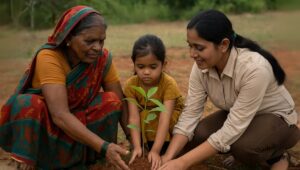
Planting Hope: Stories from Tree Plantation Drives
Explore how ACTIZEET Cares is transforming rural India through tree...
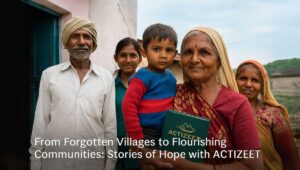
From Forgotten Villages to Flourishing Communities: Stories of Hope with ACTIZEET Cares
Discover how ACTIZEET Cares is changing lives in rural India...

From Herbal Garden to Classroom: Shanta Devi’s Journey
Follow Shanta Devi's journey from tending a small herbal garden...

A Day in the Life of a Village Health Worker
Step into the world of a dedicated village health worker...

