
What the Mountains Teach Us About Care
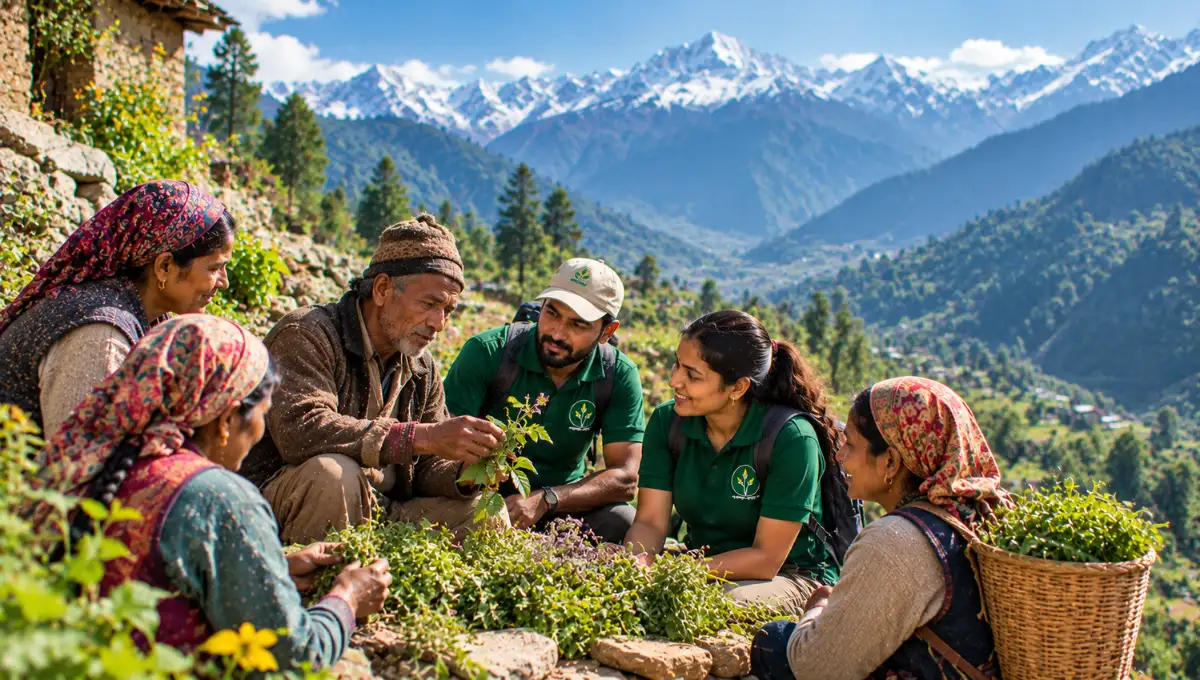
In the Himalayas, care is not a special event. It is a daily practice. It shows up in the way a village shares its forest, cleans its spring before the monsoon, carries an elder down a steep path to the clinic and leaves a little grain for the next traveller. Spend time in these mountains and you begin to see that care here is less about grand gestures and more about steady attention to people, land and water.
Life in the mountains has never been easy. Winters are long, roads can vanish under a landslide overnight, and a single bad season can empty a family's grain store. Yet over centuries, Himalayan communities have built ways of living that keep people and places going through all of this. At the heart of those ways is care: for one another, for the forests and fields, and for those who will come later.
This article looks at what the mountains teach us about care. It draws on well-known Himalayan traditions and community movements, and on the everyday habits that visitors and volunteers often notice first. The aim is simple: to understand these lessons clearly and to see how anyone, in a city flat or a village home, can bring a little of that mountain wisdom into daily life.
Care in the Mountains Means Something Different
In busy cities, care often gets reduced to a transaction. We pay for services, send a message, order a gift. In a mountain village, care is more physical and more shared. When a house needs a new roof before winter, neighbours turn up to help. When a woman gives birth, relatives cook and fetch water for weeks. When the path to the school is damaged, the whole hamlet works together to clear it.
This is not because mountain people are somehow more saintly than anyone else. It is because the land makes the need for care obvious. If you ignore your neighbour, you may have nobody to help you after a snowstorm. If you cut too many trees, the slope above your home may slide. In the Himalayas, the link between caring and surviving is easy to see, and that makes the lessons unusually clear.
Seven Lessons the Mountains Teach About Care
Nothing in the mountains happens fast. Terraced fields took generations to build, one stone wall at a time. Apple and walnut trees take years before they bear fruit. A climb that looks short on a map takes hours on foot. People who live here learn to move at the pace the land allows.
Care works the same way. A child learns to read slowly. A sick person heals slowly. Trust in a community builds slowly. The mountain lesson is to stop expecting instant results and to keep showing up, season after season. Small, steady effort usually does more good than a single burst of enthusiasm that fades.
In many Himalayan villages, work is shared through systems of mutual help. Families take turns helping one another with sowing, harvesting, house building and carrying loads. The names differ from valley to valley, but the idea is the same: today I help you, tomorrow you help me.
This teaches something modern life often forgets. Asking for help is not weakness, and offering it is not charity. It is simply how people get through hard times together. A community that shares its work also shares its worries, and that alone makes difficult seasons easier to bear.
In 1973, in the hills of what is now Uttarakhand, villagers began hugging trees to stop them from being cut for commercial logging. This became the Chipko movement. One of its best-known moments came in 1974 at Reni village, where Gaura Devi and a group of local women stood in front of the forest and refused to move. They understood what outsiders did not: the forest gave them fodder, firewood, clean water and protection from landslides.
The Chipko story is a lesson about care for nature that still feels urgent. The things that quietly protect us, such as forests, rivers, clean air and healthy soil, need our protection in return. Caring for the environment is not separate from caring for people. In the mountains, they are the same thing.
Uttarakhand's Van Panchayats, village forest councils formally recognised since 1931, let communities manage their own forests. Villagers agree on rules about when grass can be cut, how much wood each family can take and when parts of the forest must be left to recover. In Himachal Pradesh, traditional channels called kuhls carry glacier and stream water to fields, and families share the work of cleaning them and the turns for using the water.
These systems show a kind of care built on fairness. Shared resources last only when everyone takes a fair share and helps with upkeep. It is a lesson that applies far beyond the hills, whether to a housing society's water tank, a school playground or the planet itself.
With many young people moving to cities for work, mountain villages often have a large share of older residents. These elders hold knowledge that is hard to find in any book: which slopes are unstable, which plants heal a cough, when the snow will melt and how to read the sky before a storm.
Caring for elders in the mountains means more than meeting their physical needs. It means listening to them, asking their advice and making sure they are not left alone through long winters. Neighbours check on older people living by themselves, share meals and help them reach health centres. Care for the old is also a way of caring for the wisdom they carry.
Mountain life keeps people moving. Walking uphill, carrying water, tending fields and herding animals are part of daily routine. Traditional mountain diets often include millets such as mandua (ragi) and jhangora (barnyard millet), local pulses, greens, buttermilk and seasonal fruit. Meals are simple, home-cooked and eaten at regular times.
The lesson here is that self-care is not selfish. You cannot carry others if you cannot carry yourself. Regular movement, simple nourishing food, rest after hard work and time outdoors are some of the oldest wellness habits there are. Mountain people also know when to stop. When the body says it is tired, they rest, because pushing through on a steep path can be dangerous.
Many Himalayan traditions look far ahead. Trees are planted that will only give shade to grandchildren. Springs are protected so that they will still flow in fifty years. Stories, songs and festivals pass on values to children who will one day look after the same land.
This long view is a deep form of care. It asks us to consider not only what helps us today, but what we leave behind. In a world of quick decisions, the mountains remind us to ask a slower question: will this still be good for people long after I am gone?
Inspired to live with more balance and care? Explore everyday wellness from ACTIZEET®.
Explore ACTIZEET®Mountain Practices and What They Teach
Many Himalayan practices carry lessons that can be used almost anywhere. The table below links a few of them to everyday life.
| Mountain Practice | What It Teaches | How to Apply It Today |
|---|---|---|
| Chipko movement | Protecting nature protects people | Plant trees, reduce waste, support local green efforts |
| Van Panchayats | Shared resources need fair rules | Take part in managing common spaces in your area |
| Kuhl irrigation | Upkeep is everyone's job | Share maintenance work at home, school or office |
| Spring (naula and dhara) care | Small daily care keeps sources alive | Save water and keep local water sources clean |
| Shared farm labour | Mutual help makes hard work lighter | Offer help to neighbours and accept it when needed |
| Respect for elders | Wisdom is a resource to protect | Spend time with older relatives and listen to their stories |
| Seasonal, local food | The land provides what the body needs | Eat millets, local greens and seasonal fruit |
Voices and Moments From the Hills
People who spend time in Himalayan villages often come back with small stories rather than big ones. These moments, common across many valleys, capture the spirit of mountain care better than any definition.
The Cup of Tea for a Stranger
Walk through almost any mountain hamlet and someone will likely offer you tea. It does not matter that you are a stranger, or that the family has little to spare. Hospitality in the hills is a quiet form of care: noticing a tired traveller and making sure they rest before the next climb.
Cleaning the Spring Together
Before the rains, families in many villages gather to clean the naula or dhara, the traditional stone-lined spring or water spout. Leaves are cleared, walls are repaired and the area around the source is kept clean. Nobody is paid. Everyone knows that if the spring fails, the whole village suffers.
Carrying Someone Down the Mountain
Where roads do not reach, a sick person or a woman in labour may have to be carried on a chair or stretcher for hours to reach a road or clinic. Men and women take turns carrying, sharing the weight over long distances. It is one of the clearest pictures of what care means in the mountains: showing up, sharing the load, and not letting anyone make the journey alone.
A Changing Mountain World
The mountains are not frozen in time. Climate change is affecting snowfall, glaciers and rainfall patterns. Many springs across the Himalayan region have been drying up or flowing less, which scientists and communities alike have been tracking with concern. Heavy rain events and landslides have become a growing worry. Migration has left some villages with few young people, and traditional systems of shared work are harder to keep going.
Yet mountain communities are adapting. Groups are reviving springs through recharge work on the slopes above them. Young people are returning to start homestays, organic farms and small businesses. In Ladakh, engineer Sonam Wangchuk's ice stupas, tall cones of frozen water that melt slowly in spring, have become a well-known example of new ideas built on old mountain wisdom. Care in the mountains is changing its form, but it has not disappeared.
Where Outside Support Can Help
Mountain communities know their land best, so the right kind of support starts by listening. Useful help often means strengthening what already works: supporting local health workers, improving access to schools and clinics, backing women's groups and helping with water and forest conservation that communities themselves lead. The lesson for any CSR initiative is the same one the mountains teach: care is about partnership, not charity.
Through Voices from the Himalayas, ACTIZEET® Cares shares the stories, wisdom and quiet strength of mountain communities. We believe the best way to care for these places is to listen first, learn deeply and support what communities are already building for themselves.
Learn More About ACTIZEET® Cares →Bringing Mountain Care Into Daily Life
You do not need to live in the Himalayas to practise what the mountains teach. A few simple habits can bring the same spirit of care into any home or community.
- Slow down and give care the time it needs, whether for a child, an elder or yourself.
- Know your neighbours and be ready to help, and to ask for help, when times are hard.
- Treat shared spaces and resources with respect, and do your part in keeping them in good shape.
- Protect the natural things that protect you, such as trees, water and clean air.
- Spend time with older people and listen to what they know.
- Look after your own body with simple food, regular movement and proper rest.
- Make choices with the next generation in mind.
- Offer small kindnesses, like the cup of tea for a stranger, without expecting anything in return.
Frequently Asked Questions
Care, the Mountain Way
The mountains do not teach care through speeches. They teach it through a stone wall rebuilt after the rains, a spring cleaned by many hands, a forest guarded by women who refused to step aside and a stranger welcomed with tea. Care, in the mountain way, is patient, shared, practical and always looking ahead. It is something we can all practise, wherever we live.
ACTIZEET® Cares will keep listening to the voices of the Himalayas, because the people who live closest to these peaks have much to teach the rest of us about how to look after one another and the world we share.
Sources referenced: publicly available histories of the Chipko movement and Uttarakhand's Van Panchayat system, and information from the International Centre for Integrated Mountain Development (ICIMOD) on Himalayan springs and climate change.
Latest from Our Blog

How High-Altitude Living Shapes Health
Explore how living in high-altitude regions impacts physical and mental...
Voices of Change: Youth in the Himalayas
Meet the inspiring youth of the Himalayas who are driving...


Why the Himalayas Are More Than a Landscape
A reflection on what the Himalayas truly represent, from living...

