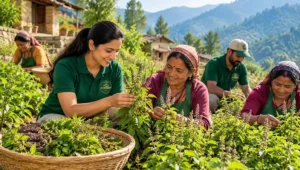
When a Village Becomes a Classroom
You arrived expecting blackboards and lesson plans. But what you found in that hillside village was something deeper—an entire community teaching, guiding, and growing together.
Children weren’t learning just from teachers. They were learning from herbalists, farmers, mothers, and elders.
This is ACTIZEET’s model of community-based schooling—a holistic, rooted approach that doesn’t just educate children, but uplifts everyone involved.
You didn’t just see a school. You saw a movement.
Why Traditional Schooling Misses the Mark in Rural India
In many remote regions, formal schooling struggles to reach children:
- Schools are too far
- Teachers are irregular or absent
- Curriculum feels disconnected from local life
And so, dropout rates rise. Girls stay home. Boys start working.
But what if education didn’t require leaving home? What if the village itself became the school?
That’s the question ACTIZEET asked. And the answer led to something extraordinary.
What Is Community-Based Schooling?
It’s simple, really:
Education designed, supported, and led by the community for its own children.
It’s a model where:
- Local women become mentors
- Herbal gardens become science labs
- Elders share stories as history
- Parents sit in on classes, not just PTMs
It’s schooling that’s inclusive, intuitive, and deeply connected to the rhythms of rural life.
The First Time You Saw It
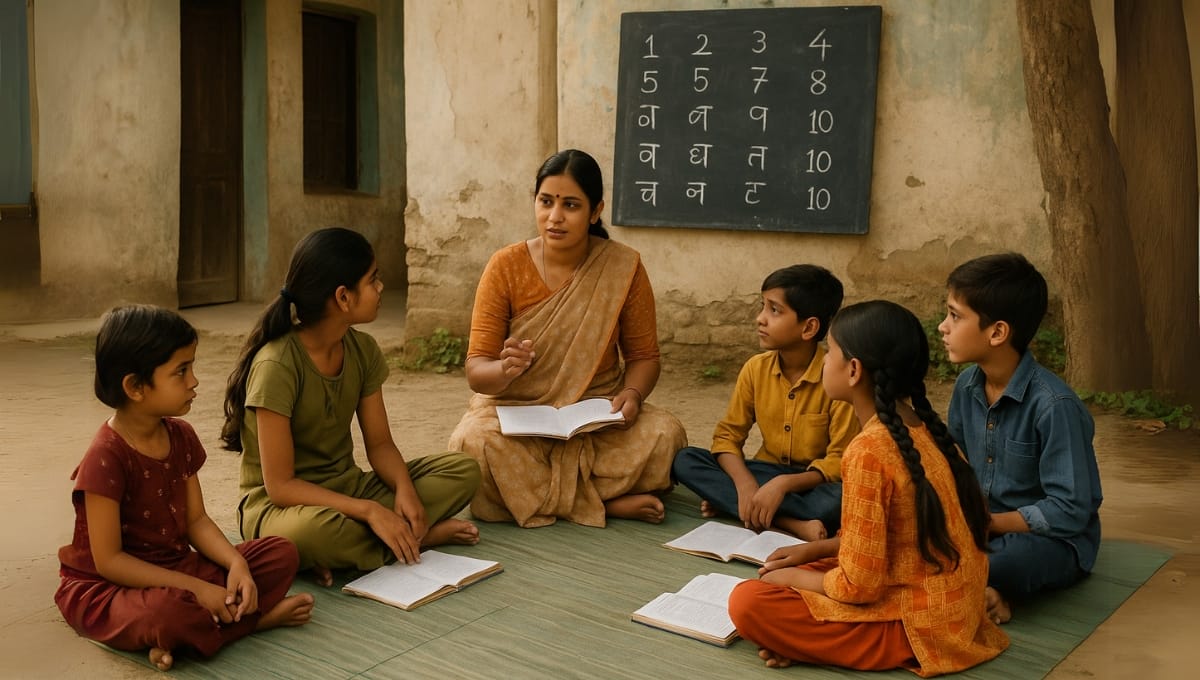
You remember stepping into that shaded open-air classroom under a neem tree.
There were no desks—just mats. No uniforms—just bright, practical clothes. But the children were focused. Curious.
A local teacher was explaining how turmeric heals wounds—part science, part storytelling. She used leaves, drawings in the mud, and songs.
You asked a boy his favorite subject.
He said, “Neem. Because it protects us.”
You smiled. Because this wasn’t just education—it was living knowledge.
ACTIZEET’s Four Pillars of Community-Based Education
✅ 1. Local Teachers, Lifelong Mentors
ACTIZEET trains women and youth from within the village to become facilitators.
They’re not outsiders. They understand the children’s lives, languages, and challenges.
This builds trust—and boosts attendance.
One mother said, “When my daughter learns from our neighbor, she listens more.”
And it shows.
✅ 2. Contextual Curriculum
Instead of rigid textbooks, children learn through:
- Herbal gardens (biology)
- Soil-testing (science)
- Folk tales (literature)
- Market visits (math)
They don’t just memorize—they experience.
You saw it when the kids measured compost ratios using brass cups and called it “classwork.”
✅ 3. Village as a Living Library
In ACTIZEET’s model, everyone has something to teach:
- The potter teaches shapes
- The midwife teaches body awareness
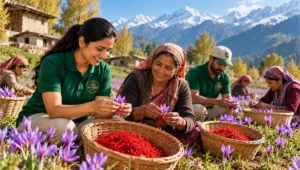
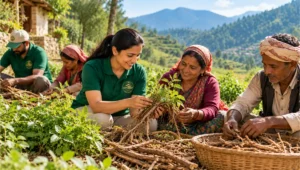
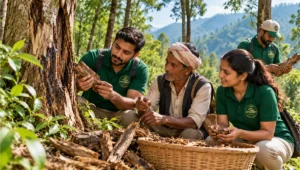
- The herbalist teaches sustainable health
Learning seeps out of the classroom and into homes, courtyards, and farms.
And children don’t just grow up—they grow with wisdom.
✅ 4. Collective Ownership
The community doesn’t just watch—it participates.
- Villagers help construct classrooms
- Mothers help with midday meals
- Elders monitor attendance and safety
- Youth document herbal practices digitally
It’s education not as a service—but as a shared responsibility.
A Day in the Life of a Village Learner
Morning begins not with bells, but with birds. Children gather under a mango tree.
A young facilitator begins with storytelling. Then, herbal plant identification. Kids point out tulsi, amla, and brahmi growing nearby.
After a short break, they sit with elders learning local history—how their grandparents once used cow dung to plaster floors, and why neem twigs made better toothbrushes.
Lunch is simple, shared, and full of laughter.
Afternoon is hands-on: making balms from aloe vera.
Evening brings family discussion time—what was learned, what was liked.
This isn’t a school outside life. It’s a school within it.
The Role You Played
You didn’t teach a subject. You taught with your presence.
You helped paint alphabet murals on walls. Helped a group of children make a poster about medicinal plants.
You recorded village elders’ stories so they could be shared during class.
You didn’t just support education. You became part of the ecosystem.
And when you left, a girl ran up and said, “Come again. Next time, I’ll read to you.”
ACTIZEET’s Long-Term Vision
Community-based schooling is not a temporary project—it’s a long-term commitment.
ACTIZEET ensures:
- Regular training of village facilitators
- Locally adapted digital content (including herbal modules)
- Herbal learning kits for every learner
- Collaboration with local governance to support policy inclusion
The goal?
To scale this model without losing its soul.
Because education isn’t just about enrollment.
It’s about belonging.
What You Took Back with You
You came back from the village with:
- Red dust on your shoes
- A notebook full of local herbs
- A renewed belief that learning doesn’t need screens or perfection
You now know that:
- A village without a formal school can still be a school
- Children taught by neighbors grow up with confidence
- Wisdom doesn’t come down from the top—it grows up from the ground
Conclusion: The School That Belongs to Everyone
ACTIZEET’s approach reminds us: you don’t need a big building to teach.
You need intention. Participation. Care.
In community-based schooling, everyone learns. Everyone contributes.
And you? You’re no longer just a volunteer. You’re a witness to how education, when rooted in people and place, can truly change the future.
Because when a village raises a child, it also raises its own strength.