Empowerment in Action with ACTIZEET CARES
When you teach a woman a skill, you don’t just change her life—you often change the course of her entire community. In the first six months of 2024, ACTIZEET CARES launched a bold initiative to make skill-building accessible, practical, and empowering for rural and tribal women across India.
This is a story of hands-on training, self-confidence, income generation, and most importantly—possibility. In this review, we break down the reach, the response, and the results of our women’s training programs held between January and June 2024.
The Why: Addressing the Gender Skill Gap
Despite a growing awareness of women’s rights in India, the female workforce participation rate remains low—especially in rural regions. One major barrier is the lack of vocational training opportunities tailored to women’s needs and realities.
Many women:
- Cannot leave their homes or villages for long durations
- Have caregiving responsibilities
- Lack exposure to formal education systems
- Need culturally sensitive and language-accessible training formats
That’s where ACTIZEET CARES stepped in—with community-based, flexible training programs that meet women where they are.
Program Overview: January–June 2024
Over six months, ACTIZEET CARES conducted 18 training batches across 6 states:
- Uttarakhand
- Himachal Pradesh
- Bihar
- Odisha
- Madhya Pradesh
- Jharkhand
Key Outcomes:
- Total Women Trained: 680
- Trainers Mobilized: 45 (80% women-led)
- Skill Areas Covered:
- Herbal processing & packaging
- Natural wellness product making (soaps, oils)
- Organic farming & composting
- Basic financial literacy
- Spoken Hindi & local entrepreneurship
How the Program Works
Each training program follows a structured yet flexible model, typically running for 4 to 6 weeks per batch.
1. Mobilization & Enrollment
Local women’s groups, anganwadi centers, and panchayats helped identify participants. Special focus was given to:
- Women with no prior job experience
- Widows, single mothers, or women from marginalized groups
- School dropouts interested in re-skilling
2. Hands-On Learning
Training was designed to be practical and participatory, with a balance between demonstration and doing. Women learned by:
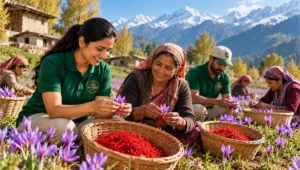
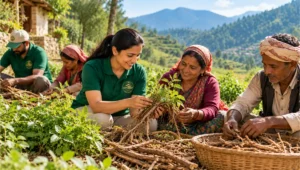
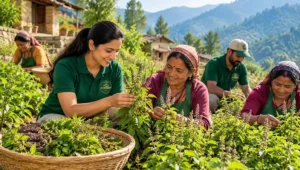
- Sorting and drying herbs
- Mixing Ayurvedic ingredients for balm/oil preparation
- Packaging products using hygiene protocols
- Maintaining simple records of inventory and cost
3. Group Formation
To encourage collective growth, women were encouraged to form Self Help Groups (SHGs) post-training. These groups received guidance on:
- Savings and credit
- Sourcing raw materials
- Connecting to ACTIZEET’s herbal supply chain
Impact on the Ground: Voices & Numbers
Real Story: Rekha from Deoghar, Jharkhand
Before the training, Rekha Devi relied on seasonal wage labor. Today, she makes and sells her own herbal face packs at the weekly haat. Her income has tripled.
“I didn’t know how much I could do with my hands until I learned. Now, my daughters say they want to be businesswomen too.”
Economic Empowerment Highlights:
- 78% of trained women reported a new or increased income source
- Average monthly income increase: ₹2,000–₹4,500
- 17 local SHGs linked to herbal micro-enterprise units
- 8 women became trainers-in-training, preparing to lead future batches
The Emotional Shift: Confidence, Community, Control
Economic change is measurable—but the emotional transformation is just as powerful.
Many participants shared how they:
- Felt more confident speaking in public
- Gained respect from family members
- Started managing their own money for the first time
- Formed friendships and support networks through group learning
For many, the training wasn’t just a class—it was their first step out of silence, dependency, and invisibility.
Challenges Faced
No grassroots program is without challenges. Key hurdles included:
1. Social Restrictions
Some families were hesitant to allow women to attend, especially if trainers were male. ACTIZEET CARES responded by prioritizing women facilitators and holding awareness meetings with family elders.
2. Literacy Barriers
Many women couldn’t read or write. We used visual aids, hands-on demonstrations, and local dialects to ensure inclusivity.
3. Market Linkages
While some SHGs began product-making, accessing broader markets remained tough. In response, ACTIZEET CARES began onboarding successful groups to its local vendor network, offering a ready sales platform.
Monitoring & Evaluation
A dedicated team of field coordinators and social impact analysts tracked progress through:
Metric | Achievement (Jan–Jun 2024) |
Women trained | 680 |
Active SHGs formed | 22 |
Products developed | 30+ herbal and organic items |
Monthly average income rise | ₹3,200 |
Continued engagement rate | 82% |
Surveys were conducted both pre- and post-training, measuring knowledge gain, confidence level, and intent to start earning.
Sustainability: Building Local Leadership
To ensure long-term continuity, ACTIZEET CARES invested in:
- Mentor Identification: Women from early batches showing leadership were trained further as peer mentors
- Training Toolkits: Easy-to-carry learning kits provided to every group for future reference
- Linkage to Financial Services: SHGs were guided in opening group bank accounts and approaching microfinance support
This approach turns training from a one-time event into a continuous development cycle.
Looking Ahead: The Next 6 Months
Based on the success and learnings of the January–June phase, ACTIZEET CARES has outlined its roadmap for the remainder of 2024:
Plans in Motion:
- Launch of “Train the Trainer” model to increase scale
- Expansion into Northeast India and tribal Maharashtra
- Creation of a mobile training unit for remote regions
- Partnership with local kisan mandis and craft markets to exhibit women-made herbal products
Our goal is to train at least 1,200 more women by the end of the year—with a focus on economic self-reliance, dignity, and voice.
Closing Note: More Than Skills, A Movement
The ACTIZEET CARES women’s training program is more than a vocational project. It’s about rewriting the script for women who were often told they couldn’t, shouldn’t, or wouldn’t.
In just six months, hundreds of women have proved otherwise. With the right support, they have begun to reshape their futures—not as passive recipients of aid, but as active creators of change.
If you’re reading this and wondering how to help, the answer is simple: support local women-led enterprises, share their stories, or volunteer your time or skills. Because every empowered woman creates waves far beyond her own home—and that ripple can start with you.