The Journey That Changed Me
You never expect one week to change your life — until it does.
I came to the hills looking to “give back.” I thought I’d be the one teaching, helping, guiding. But somewhere between herbal gardens, smiling children, and quiet moments by the fire, I realized something simple yet powerful:
I wasn’t just changing lives — I was being changed myself.
This is my story. But more importantly, it’s a story of what happens when you care, even just for a week, in a place where care is rare.
Day 1: Arrival in the Unknown
The ACTIZEET Cares van dropped me off just before sunset.
I had left behind city life — traffic, deadlines, and 4G signals. In front of me stood a small Himalayan village, the sky glowing amber, the air thick with the scent of lemongrass and wood smoke.
“Welcome,” said Lata, the local coordinator.
She handed me a cup of tulsi tea and smiled.
It wasn’t just warm. It was grounding.
That first sip marked the beginning of my unlearning — and their teaching.
Day 2: Learning to Listen
My role as a volunteer was to assist in ACTIZEET Cares’ Mobile Learning Hut and help with the herbal nursery. I thought I’d jump right into action.
Instead, I was asked to observe.
“Let the village tell you what it needs,” Lata said.
“Don’t assume. Understand.”
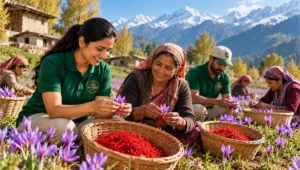
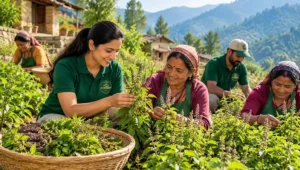
That day, I watched women gather herbs with quiet precision, and children recite plant names as if singing poetry.
I realized this wasn’t a place lacking knowledge — it was overflowing with it, just waiting to be valued.
Day 3: First Hands in the Soil
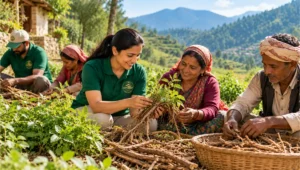
In the morning, I helped Kalpana, a local widow, transplant tulsi saplings.
Her hands were fast and confident. Mine fumbled.
She laughed, not unkindly. “The earth knows who belongs to it. But it welcomes everyone.”
We talked about her story — how herbal farming had given her an income, independence, and pride.
By noon, I wasn’t just planting. I was connecting.
In the afternoon, I led a drawing session at the learning hut. The theme? “My Favorite Plant.”
One boy drew amla. Another, neem. A little girl named Rani drew a tree taller than the hut — “This is my dream,” she said.
Day 4: More Than Medicine
ACTIZEET Cares had organized a small health camp. My task? Register villagers and help distribute herbal self-care kits.
One elderly man, Dadaji, arrived with joint pain. He spoke only the local dialect, but through gestures and smiles, we communicated.
He left with a balm made from eucalyptus and lemongrass — and a hug I’ll never forget.
Later, the health coordinator explained how ACTIZEET integrates Ayurveda with community health — treating people, not just symptoms.
That evening, I journaled one line:
“Healing isn’t a product. It’s a presence.”
Day 5: When Children Become Teachers
I sat in a circle with 12 children under a neem tree. They were teaching me — about plant cycles, soil types, and how to make herbal paste for headaches.
It wasn’t just knowledge. It was heritage.
Meher, the young community tutor, was barely 17.
She had been a student at the same hut just a year ago.
Now she led lessons, taught hygiene through songs, and inspired girls to stay in school.
In her eyes, I saw not just resilience — but leadership.
Day 6: Markets, Meetings, and Moments
I joined the women’s herbal cooperative as they packed tulsi leaves for shipment.
They debated pricing. They sorted grades. They laughed.
For these women, this wasn’t just work. It was dignity in motion.
Later, I sat with the village council as ACTIZEET Cares discussed expansion plans — a second herbal nursery, a small eco-tourism space.
The ideas weren’t imposed. They were co-created.
As the meeting ended, Kalpana handed me a gift — a small satchel of dried herbs.
“For your mother,” she said.
Tears rose unexpectedly.
Day 7: Leaving, But Not Really
My final morning was filled with hugs, handshakes, and silent smiles.
The children gifted me hand-drawn thank-you cards.
Meher slipped a note into my hand: “You helped us feel important.”
But truthfully, it was the opposite.
As the van drove away, I looked back one last time.
The mountains stood tall. The people stood taller.
I had come to teach.
But I left having learned what it means to be human, together.
What ACTIZEET Cares Taught Me
ACTIZEET isn’t just a wellness brand. It’s a bridge between tradition and transformation.
Through that one week, I saw:
- 🌱 Herbal farming restoring livelihoods
- 🧒 Children becoming educators
- 💚 Health redefined through compassion
- 🛠️ Development done with dignity, not dependency
This wasn’t aid.
It was collaborative empowerment, rooted in ancient wisdom and modern care.
Why This Story Matters to You
You might live far from these hills.
But your choices can still echo here.
When you support ACTIZEET:
- You help fund education centers in remote villages
- You support herbal entrepreneurs like Kalpana
- You bring natural healing to places overlooked
- You become part of a movement — not just a market
Conclusion: You Don’t Need a Lifetime to Make a Difference
One week.
That’s all it took.
To break my city bubble.
To experience care that’s handmade, handgrown, and heartfelt.
To see what ACTIZEET really means when it says: “We care for life, community, health, and Earth.”
So if you ever wonder whether your support matters — it does.
Because it’s not just about products.
It’s about people.
And one of them… is me.