

The Wisdom of Himalayan Herbalists
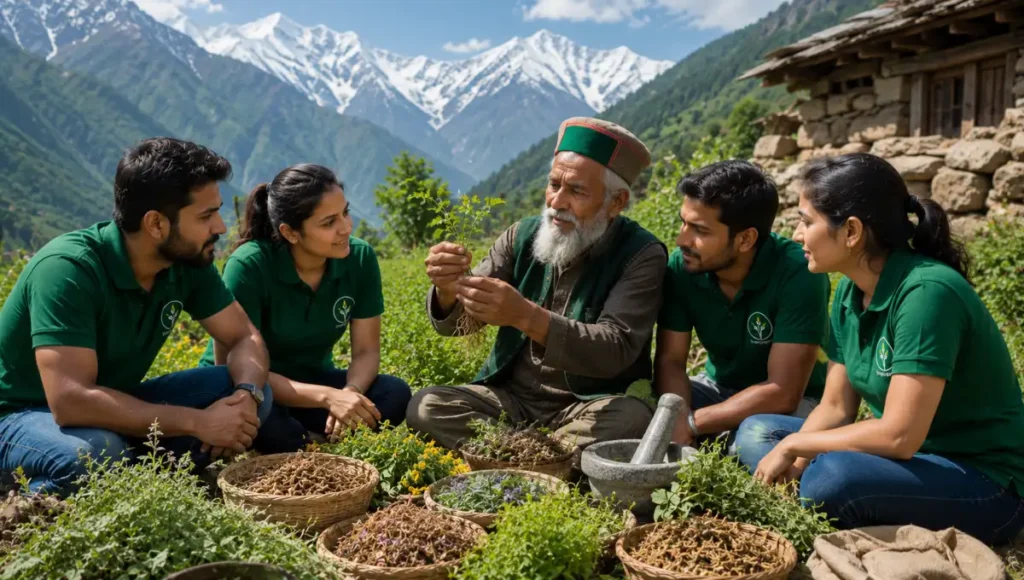
High in the cold, thin air of the Himalayas, a quiet tradition of healing has survived for over a thousand years, carried not through textbooks but through memory, apprenticeship and an intimate relationship with the mountains themselves. This post looks at who Himalayan herbalists are, the depth of knowledge they carry, and why ACTIZEET® Cares believes this wisdom deserves far more attention and respect than it usually receives.
Long before modern pharmacies reached remote mountain villages, communities across the Himalayas relied on local healers who understood the land better than anyone else. These practitioners did not learn from a syllabus, they learned by walking the same slopes their teachers walked, identifying plants their teachers had shown them years earlier, season after season, altitude after altitude.
This post explores the depth and discipline behind the knowledge held by Himalayan herbalists, the unique environment that shaped their practice, and why preserving this kind of traditional knowledge matters, both for the communities who hold it and for the wider understanding of natural, plant-based wellness.
Who Are Himalayan Herbalists
Across the high altitude regions of Ladakh, Lahaul-Spiti, Sikkim and parts of Uttarakhand and Himachal Pradesh, traditional healers known as Amchis have practiced a system of medicine called Sowa-Rigpa, often referred to as the Amchi or Tibetan system of medicine. According to research published on ScienceDirect, this tradition traces back to Buddhist monks who carried and taught medicinal knowledge in the Ladakh region between the seventh and twelfth centuries, making it one of the world's oldest documented medical systems.
Amchis are not the only Himalayan herbalists, similar traditions of local plant-based healing exist across different mountain communities under different names, but they share a common thread, deep, place-specific knowledge built through direct experience with the local environment rather than formal institutional training.
A Landscape Unlike Any Other
The Himalayas are not a single, uniform environment, they shift dramatically across altitude, from temperate forests to cold, arid high-altitude deserts. This variation has produced an extraordinary range of native plant life. Research summarised in the Indian Journal of Traditional Knowledge describes how local Amchi practitioners rely on native flora with therapeutic potential to treat a wide variety of ailments, a body of knowledge built specifically around what grows in their own high-altitude surroundings.
A survey covering the Ladakh and Lahaul-Spiti regions, published through the Annals of Arid Zone, documented over three hundred medicinal plant species used by local Amchis, several of them rare or endangered, underlining just how closely this knowledge is tied to a fragile and specific ecosystem.
What Makes Himalayan Herbal Wisdom So Distinct
Himalayan herbalists typically inherit their knowledge from a parent, grandparent or mentor, refined and passed down across many generations. This is not knowledge learned quickly, it accumulates slowly, tested repeatedly against real conditions over decades, which gives it a depth that is difficult to replicate through short-term study alone.
Plants growing at high altitude often develop differently than those at lower elevations, adapting to intense sunlight, cold temperatures and thin air. Himalayan herbalists understand these environmental influences intimately, knowing not just which plant to use but where, when and at what altitude it grows best for their intended purpose.
Traditional Himalayan healing systems generally do not separate physical health from broader ideas of balance and wellbeing. Sowa-Rigpa, much like Ayurveda, approaches health through the lens of overall balance rather than treating isolated symptoms alone, reflecting a more integrated view of the person as a whole.
Because Himalayan herbalists depend entirely on their local environment, sustainable harvesting has traditionally been treated as a serious discipline, not an afterthought. Practices such as harvesting only mature plants, leaving enough behind for regrowth, and rotating collection areas reflect generations of learning how to use these resources without exhausting them.
Much of this knowledge has historically been passed down orally, through direct apprenticeship rather than written manuals. A young herbalist typically learns by observing and assisting an experienced practitioner for years before being trusted to work independently, a slow, hands-on model of education very different from formal classroom learning.
In many Himalayan villages, the local herbalist is a deeply trusted figure, often relied upon long before, or alongside, formal medical services. This trust is not built overnight, it comes from consistent, visible presence within the community across generations, much like the trust described in other grassroots ACTIZEET® Cares programs.
Himalayan herbalists today are not frozen in the past, many are actively navigating modern challenges, from climate change affecting plant availability to declining interest among younger generations in continuing the practice. Balancing tradition with these new realities is an ongoing, active part of what it means to be a herbalist in this region today.
Interested in how ACTIZEET® Cares supports traditional knowledge in hill communities?
Connect With ACTIZEET® CaresNotable Himalayan Medicinal Plants
The Himalayas are home to a wide range of medicinal plants that Amchi and other traditional herbalists have studied and worked with for generations. The table below highlights a few well-documented examples and their general area of traditional significance. This is shared for cultural and educational context only, not as usage guidance, since many of these plants require specialised knowledge and are traditionally handled only by trained practitioners.
| Plant | Region Commonly Found | Traditional Area of Significance |
|---|---|---|
| Rhodiola | High-altitude Ladakh and trans-Himalayan zones | Traditionally regarded as an adaptogen in high-altitude healing systems |
| Saussurea costus | Alpine meadows of the western Himalayas | Documented as significant in traditional Amchi formulations |
| Dactylorhiza hatagirea | High-altitude Himalayan meadows | Recognised in ethnobotanical studies as a high-value traditional species |
| Podophyllum hexandrum | Temperate to alpine Himalayan zones | Studied for its role within traditional Himalayan pharmacological practice |
| Aconitum heterophyllum | Alpine and sub-alpine Himalayan regions | A specialised plant used only by trained Amchi practitioners under strict traditional protocol |
Several of these species are classified as rare or endangered, which is part of why sustainable harvesting practices among traditional herbalists matter so much for the long-term survival of both the plants and the knowledge tied to them.
Why This Wisdom Matters to ACTIZEET® Cares
ACTIZEET® Cares is the corporate social responsibility initiative behind brand ACTIZEET®, working to bring greater visibility and respect to traditional knowledge systems that are often overlooked in mainstream conversations about wellness. The wisdom held by Himalayan herbalists is exactly the kind of grassroots expertise we believe deserves recognition, not replacement.
Learn More About ACTIZEET® Cares →This interest connects naturally to the broader hill community work ACTIZEET® Cares has been part of, from supporting practical challenges like recycling infrastructure to recognising and elevating traditional knowledge holders in remote regions. Just as a functioning waste system in the hills has to be designed around local realities, respecting traditional herbal knowledge means engaging with it on its own terms rather than trying to reshape it into something more familiar.
Recognising Knowledge That Already Exists
Much like the approach behind other ACTIZEET® Cares initiatives, our interest in Himalayan herbalists is not about introducing something new, it is about recognising and respecting knowledge that has already proven itself valuable for generations, and helping ensure it does not disappear from lack of visibility or support.
Supporting Documentation Without Disruption
Where possible, ACTIZEET® Cares supports efforts to document and share this knowledge responsibly, working alongside local communities and practitioners rather than imposing outside frameworks onto traditions that were never meant to be standardised in the first place.
How This Knowledge Can Be Respected and Preserved
Traditional Himalayan herbal knowledge faces real pressure today, from declining interest among younger generations to environmental changes affecting plant availability. A few principles can help support its survival.
- Support documentation efforts led by or done in close partnership with local practitioners themselves.
- Avoid extracting or commercialising traditional knowledge without proper recognition or benefit to the originating community.
- Encourage sustainable harvesting practices that protect rare and endangered plant species long term.
- Support opportunities for younger generations to learn directly from experienced herbalists.
- Approach this knowledge with genuine respect, as a complete system, rather than isolating individual plants out of context.
Frequently Asked Questions
Wisdom Worth Protecting
The knowledge held by Himalayan herbalists did not come from a single discovery or a lucky finding, it was built slowly, generation after generation, through direct, patient relationship with one of the world's most demanding landscapes. That kind of depth is rare, and once lost, it does not come back easily.
ACTIZEET® Cares believes this wisdom deserves genuine recognition and respect, not as a curiosity but as a living, valuable knowledge system carried by real people in real communities across the Himalayas today.
Sources referenced: ScienceDirect, Indian Journal of Traditional Knowledge and the Annals of Arid Zone.
Latest from Our Blog

How High-Altitude Living Shapes Health
Explore how living in high-altitude regions impacts physical and mental...
The Wisdom of Himalayan Herbalists
Explore the deep traditional knowledge of Himalayan herbalists, from Amchi...
Himalayan Festivals Rooted in Nature
Explore the sacred bond between Himalayan festivals and nature. Discover...
What the Mountains Teach Us About Care
From Chipko to shared forests and spring care, Himalayan communities...

