
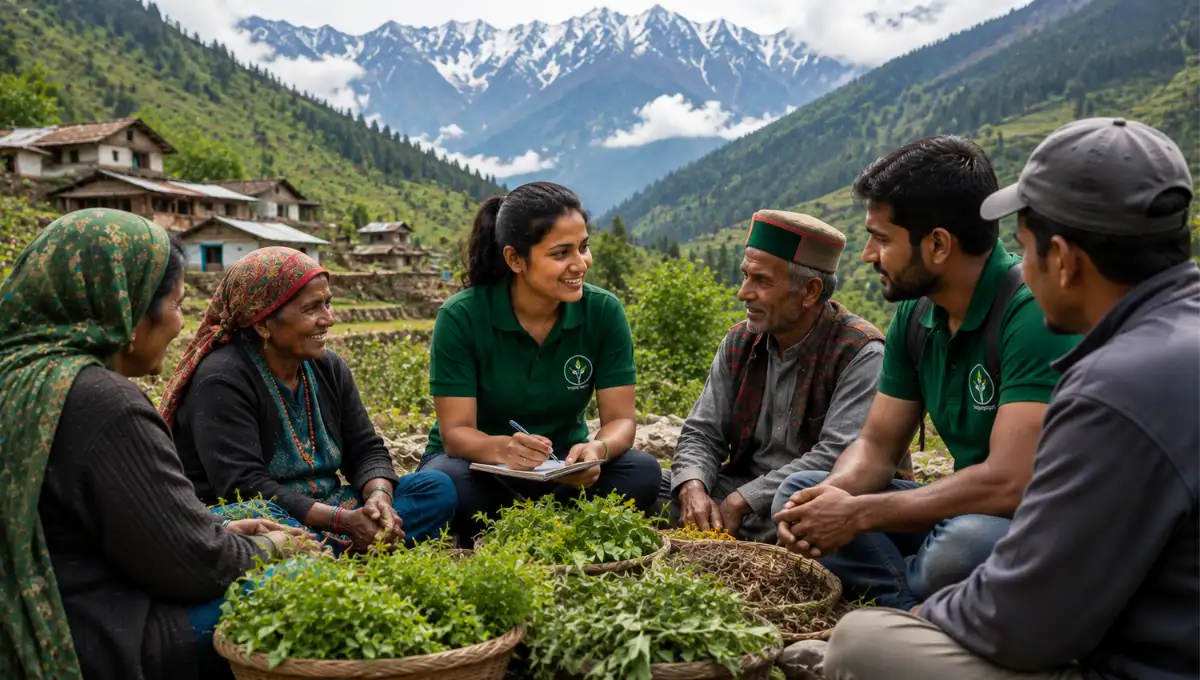
My Week in the Mountains: A Volunteer's Reflection
I did not expect a week to change how I think about work, community or even my own patience. But that is exactly what happened when I signed up to volunteer with ACTIZEET® Cares in a small mountain village for seven days. This is my honest, unfiltered account of that week, the good, the humbling, and the parts I am still thinking about weeks later.
Shared as part of our Volunteer Diaries series, a collection of first-hand reflections from people who have spent time with ACTIZEET® Cares in the field.
I signed up for this trip mostly out of curiosity. I had read about ACTIZEET® Cares' work in hill communities and thought a week of volunteering would be a nice break from my usual routine. What I got instead was something closer to a mirror, a week that made me look honestly at my own assumptions about rural life, hard work and what it actually means to help.
This is not a polished highlight reel. It is my week, more or less as I lived it, written down mostly for myself and now shared here in case it is useful to anyone else considering a similar trip.
The Trip at a Glance
Day One: Arrival and First Impressions
The drive up took longer than I expected, winding roads that seemed to fold back on themselves every few minutes. By the time we reached the village, my ears had popped twice and my phone had lost signal entirely, which honestly felt like the trip properly beginning.
My first impression was how quiet everything was. Not empty, just quiet in a way I was not used to. No traffic, no constant background hum, just wind, the occasional dog barking somewhere down the slope, and the sound of someone chopping wood nearby. I remember thinking I had packed all the wrong things, city clothes for a place that clearly did not care about them.
Day Two: Learning the Rhythm of Mountain Life
Day two started early, earlier than I am used to, with the household I was staying with already up and moving before sunrise. I tried to help with breakfast preparations and mostly got in the way, which was a fairly accurate preview of how the rest of the morning went.
What struck me most was how differently time seemed to move here. Nobody was rushing, but somehow everything still got done, water fetched, animals fed, a small kitchen garden tended, all before I had finished my first cup of tea. It made my usual sense of being "busy" feel a little silly in comparison.
In the afternoon, I finally joined the local team working on a community project, mostly listening and observing rather than doing much. Someone gently reminded me that my job this week was not to fix anything, just to understand it first.
Day Three: Getting Hands-On With the Local Team
By day three, I had earned enough trust, or maybe just enough patience from everyone around me, to actually help with real tasks. I spent the morning helping sort and organise supplies for a local initiative, simple work, but work that clearly needed extra hands.
What I had not expected was how physically tiring simple tasks could be at this altitude. Carrying things uphill that would have felt effortless back home left me out of breath within minutes. Everyone found this quietly amusing, in a kind way, and one of the older women on the team laughed and told me it takes a few days for the body to adjust.
Day Four: A Setback and What It Taught Me
Day four was the hardest day, and I think it is important to include that honestly rather than skip over it. Heavy rain overnight had made one of the paths we needed unusable, delaying a planned activity by an entire day. I remember feeling frustrated, mostly because I had built up expectations in my head about how the week would go.
What surprised me was how calmly everyone else handled it. Plans shifted, tasks were rearranged, and nobody seemed particularly bothered. Someone pointed out that this happens often enough here that getting upset about it would be exhausting. That reframing stuck with me far longer than the actual delay did.
Instead, we spent the day doing smaller, indoor tasks, mostly organising records and materials for an upcoming session. It was not glamorous, but it was useful, and I began to understand that usefulness here rarely looks dramatic.
Day Five: Small Wins That Mattered
By day five, I had settled into a rhythm. I woke up without needing to be told what to do, found small ways to help before being asked, and started recognising faces around the village instead of feeling like an obvious outsider.
The actual highlight of the day was small by any outside measure, helping set up a simple collection point as part of one of the community's ongoing efforts. It took a few hours, plenty of adjustments, and a fair amount of trial and error. But watching it actually get used later that afternoon, by people who clearly needed it, felt more satisfying than anything else I had done all week.
Day Six: Conversations That Stuck With Me
My second to last day was lighter on physical tasks and heavier on conversation. I sat with a few local families in the evening, mostly listening as they talked about their daily lives, their concerns, and occasionally their frustrations with how outside programs sometimes come and go without lasting impact.
That last part stayed with me. It was a gentle but honest reminder that a single week of volunteering means very little on its own. What matters is whether organisations like ACTIZEET® Cares keep showing up consistently, long after individual volunteers like me have gone home.
I also learned more that evening about the practical realities of life here than I had in the previous five days combined, simply by staying quiet and letting people talk.
Day Seven: Leaving, and What I Took With Me
Packing up on the final morning felt strange. A week earlier, everything about this place had felt unfamiliar. By the time I left, it felt like I was leaving somewhere I had actually gotten to know, even in such a short time.
The coordinator who had told me to simply rest and observe on day one said something on my way out that I keep coming back to, that the point of a volunteer week is rarely to change a community in seven days, it is to change how the volunteer sees things afterward. I did not fully understand that on day one. By day seven, I did.
Reflections After Coming Home
It has been a few weeks since I got back, and the version of "busy" I used to complain about looks very different to me now. I still think about that early morning household routine, the calm response to the day four setback, and the quiet thank you after the collection point was set up.
More than anything, this week reshaped how I think about help itself. I went in imagining I would be the one contributing something valuable. I left realising that most of what I actually gained was perspective, patience, and a clearer sense of how much thoughtful, consistent work goes into community programs that most people, myself included before this trip, never really think about.
On a much smaller note, this week also changed my daily habits back home in quieter ways. I have kept a few simple, natural routines I picked up there, and I still reach for the same everyday ACTIZEET® essentials I packed for the trip, mostly out of habit now rather than necessity.
Curious about ACTIZEET®'s everyday essentials that came along for this trip?
Explore ACTIZEET®What I Would Tell Anyone Considering This
If you are thinking about a similar volunteering trip, here is what I genuinely wish someone had told me beforehand.
- Go in expecting to learn far more than you teach or contribute.
- Pack light, practical clothing suited to unpredictable mountain weather, not city outfits.
- Be prepared for your sense of "productivity" to be challenged in the first few days.
- Expect at least one day that does not go according to plan, and try not to let it frustrate you.
- Spend as much time listening as you do doing, the conversations matter as much as the tasks.
Frequently Asked Questions
A Week I Did Not Expect to Think About This Much
I went into this trip expecting a nice break and maybe a good story to tell afterward. I came back with a lot more than that, a slower relationship with time, a genuine respect for the quiet, consistent work that community programs require, and a reminder that being useful rarely looks the way I imagined it would.
If you are on the fence about a volunteering trip like this, my honest advice is simple, go in ready to listen more than you speak, and let the week teach you before you try to teach it anything.
Latest from Our Blog
Teaching Rural Kids: What Books Don’t Tell You
A volunteer's honest diary on teaching rural children with ACTIZEET®...

My Week in the Mountains: A Volunteer’s Reflection
A personal volunteer diary from a week spent with ACTIZEET®...

How I Helped Set Up a Herbal Nursery
A volunteer's first-hand diary of helping ACTIZEET® Cares set up...
Volunteering With ACTIZEET: Behind the Scenes
Step into the heart of Himalayan wellness. Discover what it’s...

