

ACTIZEET® Cares Rural Internship Program: What We Learned
Every year, ACTIZEET® Cares brings a small group of students and young professionals into rural communities to work, listen and learn side by side with the people who live there. This Rural Internship Program was built to close the gap between city classrooms and village realities, and along the way it taught us far more than we expected. Here is an honest look at what the program actually involves and the lessons that shaped how we run it today.
When ACTIZEET® Cares first floated the idea of a Rural Internship Program, the goal seemed simple enough on paper: send capable, motivated interns into rural areas, pair them with local teams, and let them contribute to ongoing community projects. What we did not fully anticipate was how much the program would end up teaching us, the organisers, just as much as it taught the interns themselves.
This post is a candid recap of that experience. It covers why we started the Rural Internship Program, what the internship actually looks like on the ground, the biggest lessons we picked up along the way, and how those lessons are now shaping the next phase of ACTIZEET® Cares' rural development work.
Why We Started the Rural Internship Program
ACTIZEET® Cares was set up with a straightforward belief: sustainable rural development does not come from occasional donations or one-off campaigns, it comes from sustained, on-ground engagement over time. A rural internship program felt like a natural extension of that belief, since it gives young, capable people a direct reason to spend weeks living and working in communities they might otherwise never visit.
There was also a talent gap we kept noticing. Many bright graduates wanted to work on real social impact projects but had almost no exposure to how rural systems actually function, from local governance structures to seasonal farming cycles to the informal trust networks that hold a village together. At the same time, rural community projects often lacked extra hands who could help with documentation, outreach and coordination. The Rural Internship Program was designed to solve both problems at once, giving interns a genuine grassroots internship experience while giving our field teams meaningful extra capacity.
What started as a modest pilot with a handful of interns has since grown into a structured, recurring initiative under ACTIZEET® Cares, refined cohort after cohort based on what actually worked and what clearly did not.
Key Learnings From Running a Rural Internship Program
Almost every intern arrives with some mental picture of rural life shaped by textbooks, documentaries or social media, and almost every intern revises that picture within the first week. Villages are not uniform, and the challenges one community faces around water access, healthcare or education can look completely different just a few kilometres away. We learned that the first few days of any placement should be spent purely observing and listening, not proposing solutions, no matter how well-intentioned those early ideas might feel.
An intern showing up with an ID card and a project brief does not automatically earn a community's confidence. Trust in rural settings builds through repeated, respectful presence, showing up on time, remembering names, following through on small promises, and being genuinely present at local events rather than treating them as data collection opportunities. Programs that rush this stage tend to get polite but shallow cooperation, while those that invest time in it get honest, useful engagement.
Interns arriving with slick slide decks and technical vocabulary quickly discovered that clarity in the local language beats polish every time. Community members responded far better to simple, direct conversations conducted in their own dialect than to formal presentations translated on the fly. We now actively pair interns with local coordinators for the first two weeks specifically to help bridge this communication gap, rather than expecting interns to manage it alone.
Simply placing an intern in a village and hoping they figure things out does not lead to good outcomes for anyone. The internships that generated the most value were the ones with a clear weekly structure, defined check-ins with a mentor, and specific, achievable deliverables. Exposure alone can feel meaningful in the moment but rarely translates into useful output unless it is paired with guidance and accountability.
Some of our earliest interns arrived hoping to design large, visible interventions within just a few weeks. In practice, the most appreciated contributions were often the smallest ones: helping a local health worker digitise records, assisting a farmer group with a simple record-keeping system, or supporting a school with basic teaching materials. Rural communities generally respond better to steady, practical help than to ambitious projects that cannot realistically be sustained after the intern leaves.
Standard survey formats designed in an office rarely survive first contact with an actual village setting. Power cuts, unpredictable schedules, low literacy in certain age groups and cultural sensitivities around certain questions all required interns to adapt their data collection methods on the fly. We now train interns to treat every form or questionnaire as a starting draft, not a fixed script, and to prioritise accurate, respectful data over neatly completed paperwork.
The single clearest lesson across every cohort has been this: any initiative that depends entirely on the intern's presence tends to fade once that intern leaves. Projects that survive and grow are the ones where local community members are involved in the planning from day one and are equipped to continue the work independently. This has reshaped how we brief every incoming batch of interns under the Rural Internship Program, with community ownership now treated as a core success metric rather than an afterthought.
Interested in supporting or partnering with ACTIZEET® Cares on rural development work?
Get in Touch With ACTIZEET® CaresKey Learnings at a Glance
| Lesson Learned | Why It Matters | How We Apply It Now |
|---|---|---|
| Rural realities vary widely | Assumptions built outside the community rarely hold true on the ground | First week of every placement is dedicated to observation only |
| Trust builds slowly | Shallow engagement produces shallow, unreliable results | Interns commit to consistent presence before proposing any activity |
| Local language wins | Community members open up more with simple, direct local communication | Interns are paired with local coordinators for translation support |
| Structure over exposure | Unstructured placements rarely produce usable outcomes | Weekly check-ins, mentors and clear deliverables for every intern |
| Small actions matter | Sustainable help beats short-term, high-visibility projects | Interns are guided toward practical, maintainable contributions |
| Flexible data methods | Rigid templates fail against real field conditions | Interns are trained to adapt tools rather than force a fixed format |
| Community ownership | Determines whether progress continues after the intern departs | Local involvement is built into every project from the planning stage |
How the ACTIZEET® Cares Rural Internship Program Works
ACTIZEET® Cares is the corporate social responsibility initiative behind brand ACTIZEET®, focused on building genuine, lasting engagement between capable young talent and the rural communities that stand to benefit most from that talent. The Rural Internship Program is one of its core pillars, connecting interns with local partner organisations for hands-on, mentored fieldwork rather than distant, desk-based CSR reporting.
Learn More About ACTIZEET® Cares →Each internship cycle under ACTIZEET® Cares typically runs for six to eight weeks and follows a consistent structure designed around the lessons above. Interns are onboarded with a short orientation covering local context, cultural norms and basic safety guidelines, then placed with a local partner organisation already active in that community.
Orientation and Community Immersion
The first stage focuses entirely on listening. Interns spend their initial days meeting local leaders, visiting households, and understanding existing community initiatives before being assigned any specific task. This immersion period has proven essential for avoiding the mismatch between planned activities and actual community needs.
Guided Fieldwork
Once oriented, interns work alongside local coordinators on defined project areas, which have included health awareness drives, basic digital literacy sessions, support for local farmer producer groups, and documentation of ongoing community programs. Every intern is paired with a mentor who reviews progress weekly and helps adjust the approach as needed.
Handover and Continuity Planning
In the final week, the focus shifts to continuity. Interns document their work clearly, train local volunteers or staff to continue any ongoing activity, and prepare a short handover report for both the community partner and the ACTIZEET® Cares team. This step, more than any other, determines whether the internship's impact outlasts the intern's stay.
What We Look For in a Rural Internship Candidate
Over multiple cohorts, we have refined what actually predicts a successful placement. Technical skill matters less than most applicants expect. What consistently matters more is adaptability, humility and a genuine willingness to learn from people whose lived experience differs from the intern's own background.
- Comfortable working with limited amenities and unpredictable daily schedules.
- Willing to listen first and hold back on proposing solutions in the early weeks.
- Basic proficiency, or willingness to learn, the relevant local language.
- Able to document work clearly for the sake of continuity, not just personal reporting.
- Genuinely interested in rural development, not only in resume-building.
Frequently Asked Questions
What the Rural Internship Program Taught ACTIZEET® Cares
Running a Rural Internship Program has been as much a learning exercise for ACTIZEET® Cares as it has been for every intern who has taken part. We started with the idea of sending help into rural communities, and we are ending up with a far more useful understanding of what genuine, sustainable community engagement actually requires: patience, humility, structure and a serious commitment to community ownership over quick, visible wins.
Each cohort continues to refine how ACTIZEET® Cares approaches rural development, and these lessons now shape everything from intern selection to project design to how we measure success long after an internship placement ends.

Latest from Our Blog
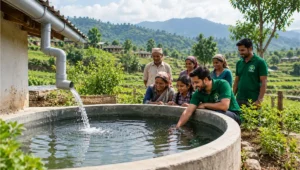
Why Rainwater Harvesting Is Reshaping Rural India
Discover how rainwater harvesting, from revived traditional structures to community-led...
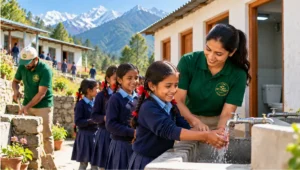
How Clean Toilets Transformed a Himalayan School
A case study on how clean, safe school toilets in...
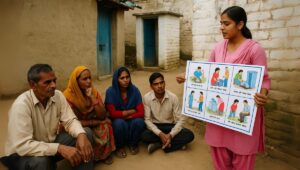
How Sanitation Awareness Changed Habits in 3 Months
Discover how a focused sanitation awareness campaign transformed daily habits...
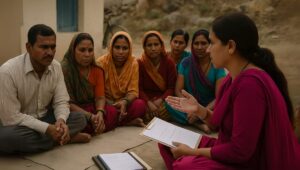
Creating Community Health Committees: A Success Story
Discover how ACTIZEET is transforming rural healthcare through Community Health...

