In a quiet Himalayan village surrounded by pine trees and whispering winds, the word “sanitation” used to mean very little. Open defecation was common. Garbage was tossed near homes. Children often fell sick, and no one questioned why.
But that was before the change began.
Before a group of determined locals, with support from ACTIZEET Cares, launched a sanitation awareness campaign that would transform the community’s mindset—in just three months.
This is your invitation to walk through that journey. A story of belief, behavior, and the simple human dignity that comes with cleanliness.
Before the Campaign: A Village in Silent Struggle
You wouldn’t have seen anything unusual at first glance. The village of Gairkot in Uttarakhand looked picturesque, with green fields and warm smiles.
But beneath the surface, daily life was riddled with small sufferings:
- Children frequently had diarrhea
- Women had to wait until dark to relieve themselves
- Waste lined narrow footpaths
- Flies swarmed near food
- People blamed the water or the weather—but never considered their habits
No one was talking about hygiene. No one imagined that these silent issues could be changed with simple awareness.
Until the idea of a village-led sanitation campaign was born.
ACTIZEET Cares Steps In: Listening Before Leading
ACTIZEET Cares had been working in nearby villages on herbal cultivation and water conservation. But during a routine health survey, the team noticed a disturbing pattern—a high incidence of preventable illnesses, especially among children.
Instead of rushing in with solutions, the team sat down with the villagers.
“We didn’t want to preach,” said Meenakshi, a field officer. “We wanted to understand.”
With the help of schoolteachers, ASHA workers, and local youth, they started the groundwork—mapping daily hygiene practices, talking to families, and identifying champions for change.
The Launch: A 90-Day Mission for Mindset Change
On Day 1, nobody thought much would change.
On Day 90, everything did.
The campaign had three core pillars:
1. Information Sessions That Spoke Their Language
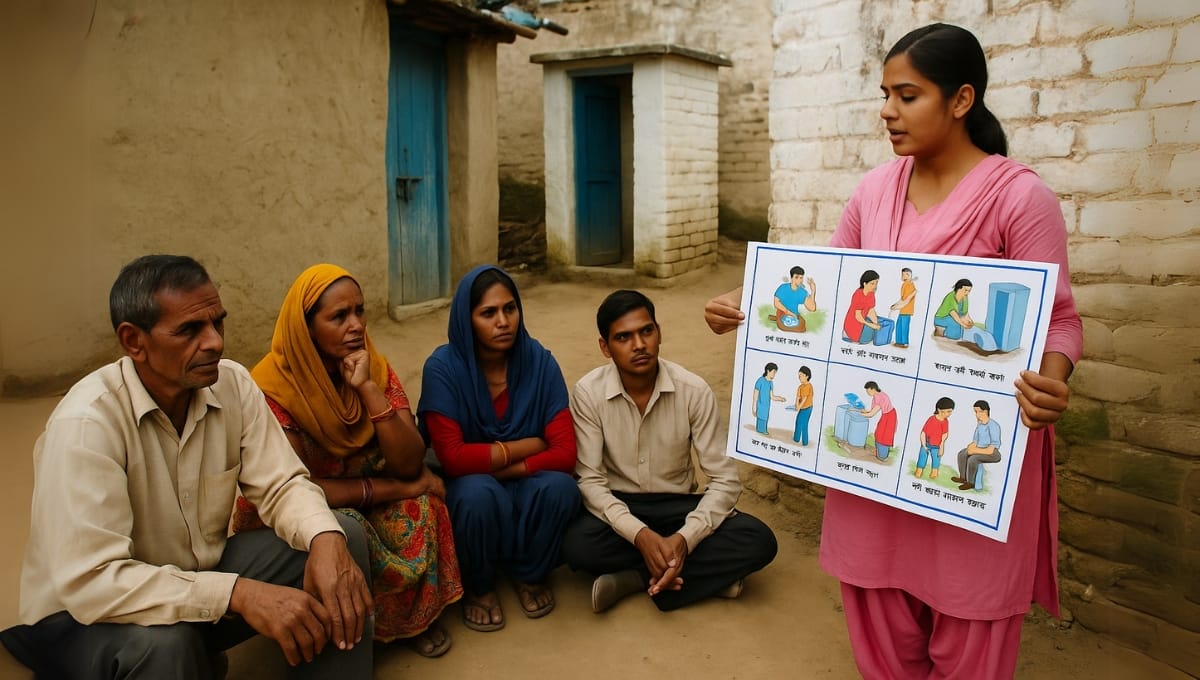
Short, engaging talks were held in schools, panchayat halls, and even farms. But instead of lectures, they used:
- Storytelling and folk songs
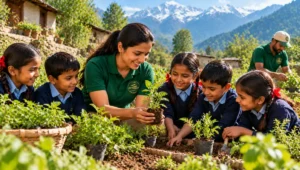
- Puppet shows for children
- Real-life roleplay
- Simple visuals showing germ transmission
The goal? Make sanitation relatable, not abstract.
2. Demonstrations That Made Things Click
Villagers watched as local health workers showed:
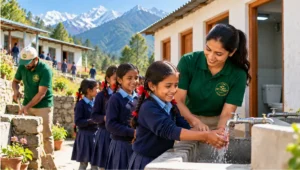
- How to properly wash hands using soap
- How open defecation leads to contaminated food
- Why toilets must be cleaned weekly
- How simple compost pits reduce household waste
Suddenly, the dots connected.
“This is why my son kept falling sick,” said Shobha Devi, a mother of two. “I never realized.”
3. Daily Habits, Tracked by the People
Each home received a small checklist:
- Did you use the toilet today?
- Did everyone wash hands before meals?
- Did you sweep your front area?
- Did you dispose of food waste safely?
Volunteers visited once a week—not to police, but to celebrate progress.
Stories of Change: The People Who Led the Way
✳️ Ramesh, the Reluctant Farmer
At first, Ramesh dismissed the campaign. “We’ve lived like this for generations,” he argued.
But after seeing his nephew hospitalized twice in a month, he tried the suggested changes—building a basic latrine, covering his water pot, and composting vegetable waste.
Two months later, he hosted a hygiene talk in his own field. “I was wrong,” he admitted. “Clean habits do save lives.”
✳️ Pinki and the Soap Song
In the village school, a 10-year-old girl named Pinki started singing a song about washing hands before every meal. Soon, her friends joined in. The “Soap Song” became so popular that even parents began humming it at home.
That song did what flyers never could—it made hygiene cool.
✳️ The Toilet Challenge
To motivate households without toilets, ACTIZEET Cares launched a friendly challenge: families that built and regularly used their toilets within 30 days would receive a solar lantern.
The result? 17 new toilets in one month. And not just for the reward—for the comfort and privacy it brought to women and girls.
Results After 90 Days: The Numbers Tell the Story
Here’s what changed in just 3 months:
- Open defecation reduced by 80%
- Handwashing before meals rose from 20% to 85%
- Children’s sick days dropped by 60%
- All households began separating dry and wet waste
- Garbage pits and compost systems were built in 70% of homes
But beyond data, something deeper had shifted:
Pride. Ownership. Dignity.
Why It Worked: Community First, Always
The success of the campaign wasn’t because of posters or products. It was because it was:
✅ Community-driven – Locals led, locals inspired
✅ Context-sensitive – Tools were in local languages, with local examples
✅ Celebratory, not critical – Progress was applauded, not shamed
✅ Habit-focused – Small, doable actions made the change sustainable
In the end, it wasn’t a campaign. It was a movement.
ACTIZEET’s Long-Term Vision: Clean Habits, Healthy Lives
Sanitation isn’t a one-time event. That’s why ACTIZEET Cares continues to:
- Support Community Health Committees to track hygiene
- Provide herbal cleaning products for schools and homes
- Train “Sanitation Champions” in each hamlet
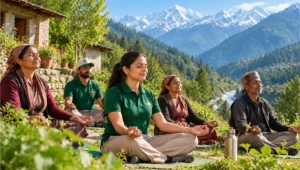
- Integrate cleanliness messages into herbal farming and wellness camps
- Work with government departments to link schemes and subsidies
Our belief is simple:
No amount of health products can substitute for clean surroundings and habits.
And change doesn’t come from outside—it begins with you.
You Can Help Keep the Momentum Going
Even if you’re miles away, your choices can support sanitation and health in rural India:
✅ Support ACTIZEET products—a part of profits goes toward rural campaigns
✅ Sponsor a toilet or handwashing station for a family in need
✅ Volunteer or donate educational kits for sanitation drives
✅ Share this story and raise awareness
Your action could inspire the next village to start its 90-day journey.
Final Thoughts: Cleanliness Is a Human Right
Sanitation isn’t about infrastructure. It’s about dignity.
It’s a girl being able to use a toilet instead of walking to the jungle.
It’s a mother knowing her children won’t fall ill from unwashed hands.
It’s a grandfather walking through his courtyard without flies buzzing around.
And when that kind of change happens in just three months—it reminds us how powerful people can be when they’re informed, trusted, and supported.
So next time you wash your hands or use your clean bathroom, take a moment to think:
How can I help make this a reality for someone else?
Because a cleaner village isn’t just a healthier one.
It’s a stronger one.